

Growth Without Disruption: How Energy Safety Canada Modernized Its Member Experience
A governance-first replatform for credentialing bodies: Drupal 11 over iMIS, five member portals, a searchable Knowledge Hub, and an SEO migration that held its rankings
A Front-End Rebuild, Back Office Untouched
Energy Safety Canada runs its entire certification business through its website: course registration, credentials, standards, all of it. But the site ran on Kentico CMS v12 with an aging iMIS RiSE front end. Content changes needed a developer, search barely worked across a library of 1,000+ resources, and membership, learning, and commerce all lived in separate, disconnected systems.
Axelerant rebuilt the public-facing experience on Drupal 11 and left iMIS exactly where it was. Course discovery, a searchable Knowledge Hub, five member portals, and a full SEO migration now run on Drupal, while iMIS still handles membership, courses, and payments behind the scenes.
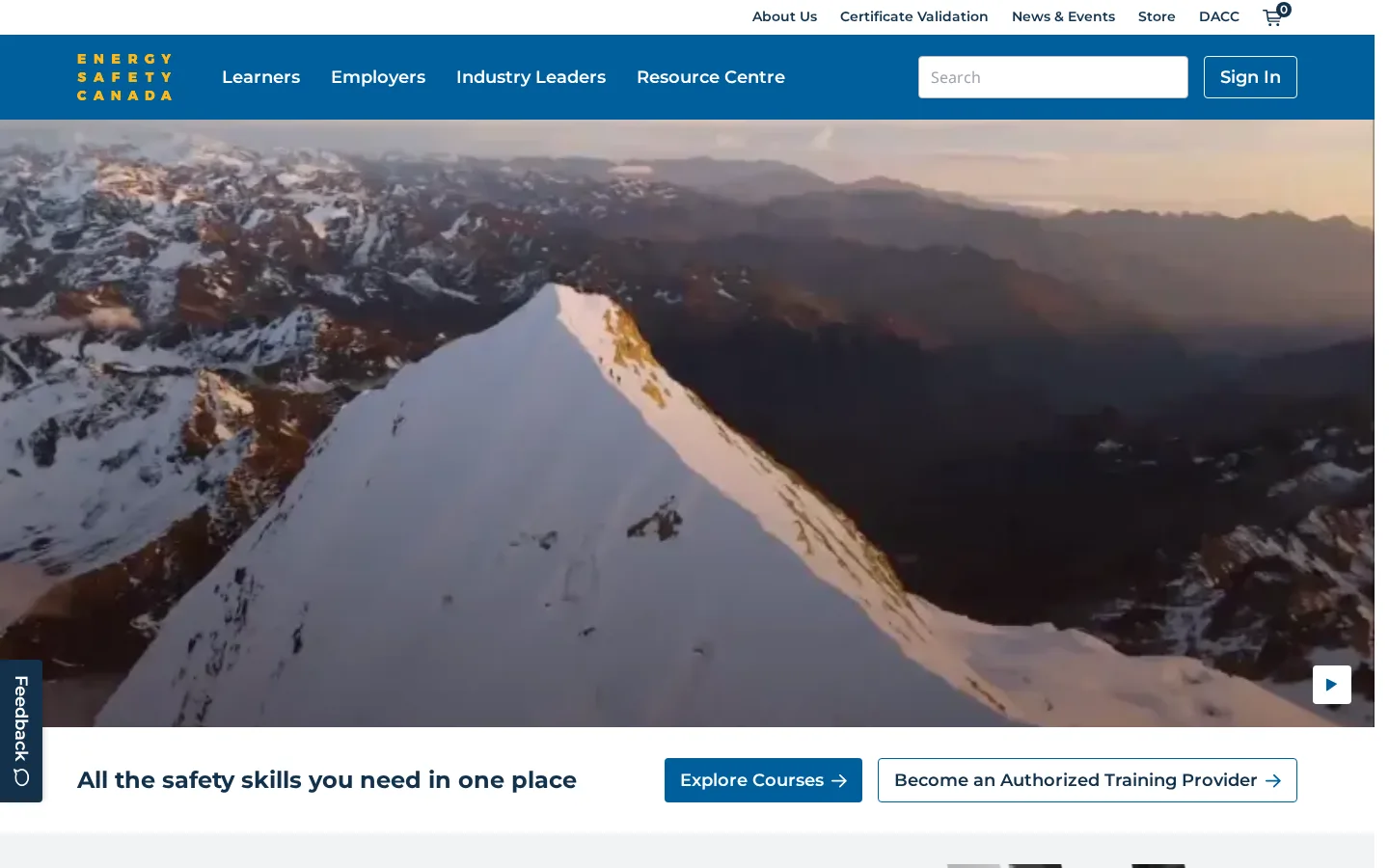
ESC's website had grown into mission-critical infrastructure without a platform built to support it. The engagement began by naming the most critical pain points.
Content Bottlenecks And Editorial Mistrust
Routine content changes ran through a rigid templating system only developers could touch. A new page or a course listing update meant opening a ticket and waiting. Over time the marketing team lost confidence in the platform and started building workarounds instead.
Broken Discovery Across A Large Resource Library
ESC had built up more than 1,000 resources: webinars, standards, tools, and documents. Search barely worked across them, so a library ESC spent years building was quietly going unused. Content quality varied too, with strong pages sitting next to badly out-of-date ones.
Fragmented Systems And Disconnected Data
Content, membership (iMIS), learning, and commerce operated as separate silos with no shared source of truth. Getting a clean view of a member's status across courses, credentials, and payments meant manual work to keep records in sync.
Ungoverned SEO Across Regional Instances
No single team or process governed SEO across ESC's regional instances. Pages were optimized inconsistently, if at all, so the site's ability to bring in new members through search was left mostly to chance.
ESC needed a platform its own team could run, without adding risk to the membership, course, and payment systems already working underneath it. It ran a competitive RFP for a modern CMS and selected Axelerant as its delivery partner.
Axelerant re-architected the front end without touching what already worked. Every decision had to protect the systems of record, hand control back to ESC's own team, or make the site easier to find, use, and manage.
Discovery First
A six to seven week Discovery phase produced functional and technical workshops, a full content audit and new content architecture, user-role analysis and portal mapping, customer journey maps, API guidelines for the iMIS integration, Figma prototypes for a component-based design system, and a roadmap and recommendation report.
Keep iMIS, Build Around It
Drupal 11 sits over the existing stack as an orchestration layer, not a full rebuild. Drupal owns content pages, course and product listings, browse-search-filter, the storefront, the Knowledge Hub, member-facing pages, WCAG 2.1 AA accessibility, and SEO. iMIS retains membership data, course data, cart persistence, checkout, and payment workflows as the unchanged system of record. Custom styling and template overrides make the checkout handoff feel like one site, not two.
Course Discovery That Actually Works
Course data comes from iMIS and is surfaced on the Drupal front end through Algolia: multi-provider selection (ESC direct or Authorized Training Providers), location and date filters, and an interactive map of provider locations, all leading into a full registration flow back in iMIS.
One Home For All ESC Resources
The resource library, now the Knowledge Hub, holds 1,000+ items: webinars, podcasts, micro-trainings, tools, documents, and industry standards. It supports PDFs, video, audio, and links, with tagging, filtering, full-text search, document preview, and download tracking, so ESC can finally see how people use what it publishes.
Five Portals, Five Different Purposes
Five portal experiences sit on top of iMIS identity with SSO/OAuth and role-based access: students register for courses and view certifications and training history, instructors manage courses and rosters, Authorized Training Providers manage access codes and rostered employee registration, company administrators handle bulk registration, rosters, and invoicing, and auditors run COR/SECOR audits and results.
Commerce Without New Compliance Headaches
The storefront and cart live in Drupal while payment and order handling stay in iMIS. That kept PCI scope off the Drupal build and let ESC keep its existing payment setup, covering individual course purchases and safety toolkit sales.
A Map That Can Grow Past Fall Protection
In a later engagement, Axelerant built a vector-based interactive map, not the Google Maps API, where users click a province to see its fall-protection rules. Federal regulations and CSA standards appear as extra regions on the same map. It is built as a generic engine, so it can cover other safety regulations later, with per-record update dates and a clear research-information disclaimer.
SEO, With An Eye On AI Search
The SEO migration ran as its own engagement alongside the build, with client sign-off at each of four milestones. The goal went past protecting rankings to Answer Engine Optimization: structuring content so AI-driven search tools can find and use it. That work included 1,780 301 redirects, canonical tags, schema markup, and a meta rewrite across the site's top pages.
The engagement produced measurable improvements within the first three weeks of launch and left ESC with a platform it can run on its own. ESC launched on Drupal 11 on May 26, 2026; figures below are from Google Search Console and GA4, May 28 to June 15, 2026.
5x Faster Page Loads
Under Kentico, every page failed Google's Core Web Vitals assessment. On Drupal 11 real visitors pass, with load times dropping from over 15 seconds to about 3 seconds. Lab scores moved from 80 desktop and 28 mobile to 100 and 95.
36,000 Monthly Organic Visits At An 8.7% CTR
Organic traffic reached roughly 36,000 visits a month, 83% of it from Canada, at an average post-launch click-through rate of 8.7%, well above the 3 to 5% typical for the niche. Weekday clicks from Google Search run 1,500 to 1,800 a day, peaking at a 10.3% CTR on June 9, 2026.
13,100 Keywords Ranked, 84.9% CTR On Branded Search
The site ranks for 13,100 keywords worldwide and 6,400 in Canada. Non-branded searches, the terms members use before they know ESC by name, already drive 11,500 visits a month, and the branded query converts at an 84.9% click-through rate at position one.
Course Search Became The Site's Busiest Page
The new course discovery experience logged 144,901 views and 18,476 active users since launch, at a 90-second average time on page. Members find and register for courses faster than they could before.
Editors Can Run The Site Without Developers
ESC's communications team makes content changes directly, without waiting on a developer for every update. That single change removes the biggest bottleneck the old platform created.
Five Portals, Zero Disruption To Membership Data
Students, instructors, training providers, company administrators, and auditors each got their own secure portal, built without touching the membership and payment systems already running in iMIS.
A Clean Migration, AEO Built In
The move executed 1,780 redirects with new canonical tags and schema markup across top pages, without losing rankings, and structured content for Answer Engine Optimization from day one.
Fully WCAG 2.1 AA Compliant
Accessibility scores went from 66 out of 100 to 95, a 29-point improvement, and the standard aligns ESC with Canadian public-sector procurement requirements.
Project Highlights
Course Discovery & Multi-Provider Registration
Finding a course used to mean scrolling a slow, developer-maintained list with no real filtering. Course discovery was rebuilt on Algolia, pulling live iMIS data into a fast, faceted search: filter by provider, location, and date, see provider locations on an interactive map, and register straight back into iMIS with no second system to reconcile. /CourseSearch is now the busiest page on the site with 144,901 views, 18,476 active users, and a 90-second average time on page since launch.
Five Authenticated Portal Experiences
Rather than five logins and five permission systems, one identity layer over iMIS carries all five portals. Students, instructors, Authorized Training Providers, company administrators, and auditors each get a portal scoped to exactly what they need, all authenticating through the same iMIS-backed SSO/OAuth layer. Five very different member journeys became one governed access model, without asking iMIS to do anything it was not already doing.
A Governed Knowledge Hub
Turning a large, loosely organized library into something people can search and trust meant governed content models for 1,000+ resources: tagging and faceted filtering in place of a flat list, PDF, video, audio, and link types normalized into one structure, and download tracking added at the content-model level so usage data comes for free on every resource. ESC can now see which resources people actually use.
An SEO Migration Built For AI Search
The SEO work ran as its own engagement with client sign-off at four milestones: 1,780 301 redirects, canonical tags, schema markup, and a meta rewrite across top pages, executed without losing rankings. Content was structured for Answer Engine Optimization at the same time, positioning ESC's pages for AI-driven search as well as traditional search engines.
Ask anything about how we ran Energy Safety Canada - or what it would look like for you.
Foyer is grounded in our own playbooks and the named work behind this record. Go deep on the methodology, the decisions, the team shape - or bring your own problem statement, use case, or intent and we'll talk it through against manufacturing engagements.