

About
The IRONMAN Group is the world’s largest operator of mass participation sports, with a global portfolio spanning triathlons, marathons, trail running, road cycling, and multi-sport events. Its brands include the iconic IRONMAN® and IRONMAN® 70.3® Triathlon Series, the Rock ‘n’ Roll® Running Series, IRONKIDS®, the Epic Series™ mountain bike races, and the UTMB® World Series.
Since its first triathlon in 1978, IRONMAN has grown into a worldwide movement, delivering hundreds of events across more than 55 countries. Known for its “Anything Is Possible®” ethos, the organization inspires millions of athletes—from first-timers to seasoned professionals—to achieve extraordinary personal milestones.
A Governance-First Rebuild For Global Brand Launches
The IRONMAN Group, operator of hundreds of global athletic events, faced a growing problem: a fractured digital estate that was difficult to scale. Editorial workflows were unreliable, integrations were unpredictable, and brand launches were slower than the business demanded.
Axelerant stepped in to transform the existing digital platform into a governed, scalable solution. Rather than delivering isolated sites, we built the DXP as a product owned by editors, marketers, and athletes — grounded in governance that enables safe speed, reusable components that scale across brands, and operational resilience that protects race-day reliability.
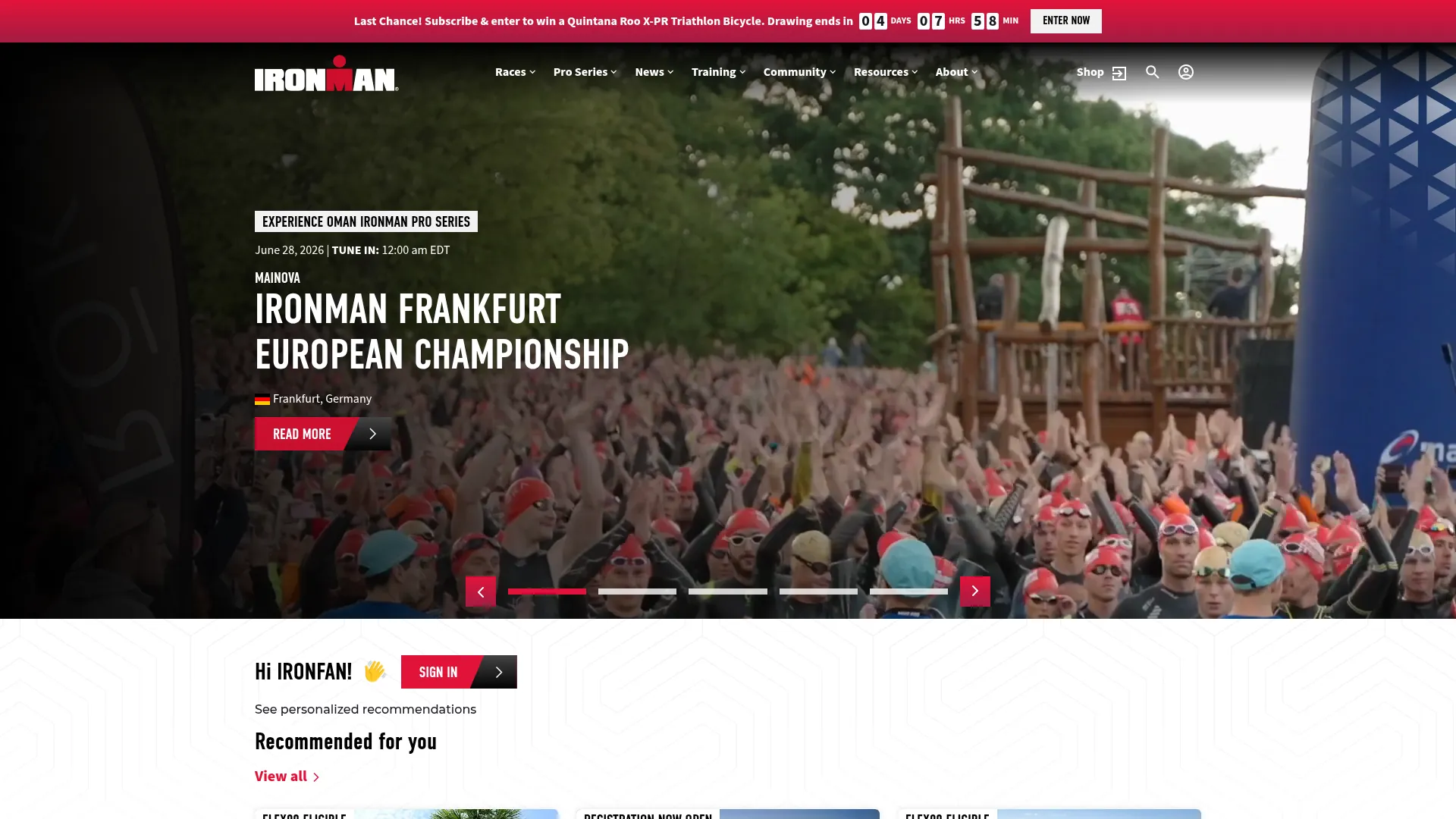
Operating dozens of brand websites on disconnected systems introduced operational inefficiency and diluted the athlete experience.
Key challenges included:
- Delayed Brand Launches
Brand rollouts required rebuilding components that should have been reusable. Without a repeatable launch framework, engineering teams duplicated effort with each new site, delaying go-to-market readiness.
- Editorial Mistrust And Workflow Breakdown
Editorial teams lacked trust in the publishing platform. Fragile integrations could overwrite live edits, disrupting campaigns and forcing manual workarounds. This slowed production and created friction between technical and editorial stakeholders.
- Unreliable Integrations And Data Inconsistency
Disparate systems caused fragmented data, sync failures, and duplication. These issues eroded reporting accuracy and hindered decision-making based on real-time event and campaign data.
- Race-Day Reliability Risks
Peak traffic and live media place unique demands on systems. The objective wasn’t merely uptime; it was brand protection: ensuring accurate event experiences, consistent UX, and reliable content and forms during high-attendance events.
- Scaling Editorial Operations
IRONMAN’s marketing organization was expanding rapidly, from ~5–10 editors to 20–25 globally. The platform needed to convert specialist engineering tasks into governed, low-code workflows so teams could publish at scale with confidence.
- A Foundation For Future Growth
IRONMAN needed a reusable foundation that could support personalization, pro-tier experiences, Coach Finder, and AI-assisted capabilities, turning athlete journeys into marketing segments for lifecycle-driven engagement.
The goal was clear: build a composable, data-enabled DXP that powered both brand scalability and continuous athlete engagement.
Axelerant partnered with IRONMAN to re-architect the platform with a focus on measurable business outcomes. Rather than approaching the engagement as a series of technical upgrades, the project was guided by one central principle:
Governance First. Reuse Always. Experience Always.
Instead of shipping standalone sites, we built a governed product platform:
- Reusable Acquia Site Studio components for consistent behavior
- Event skeletons for speed and quality.
- Operational foundations for race-day reliability
The result was a platform that puts athlete experience first, delivers new event sites faster, and protects brand reliability through governance and reuse, not brittle custom work.
Governance-First Architecture
Axelerant introduced a structured, decision-driven audit framework to classify existing assets as candidates for reuse, refactor, or rebuild. This preserved value from prior work while ensuring future builds remained high-quality and maintainable.
A centralized component library using Acquia Site Studio enabled consistent brand theming and race-specific customization, drastically reducing engineering effort and accelerating launches across brands.
Experience-Led Discovery And UX Strategy
To ensure the platform served real users, we began discovery with the athlete journey, not just page lists.
We took a map-first approach to clarify:
- What content lives at brand/global level
- What content lives at event level
- How navigation and page models should scale without collapsing
The experience was designed around real personas and “from sign-up to results” journeys for athletes, riders, and fans, ensuring the platform improved everyday moments users rely on.
Operational Resilience For Race-Day Protection
To protect reliability during peak event windows, Axelerant implemented performance and resilience patterns aligned with Acquia’s architecture:
- Acquia Cloud Platform hosting for scalability
- Varnish caching for fast edge delivery
- Memcache to reduce application load
- Deployment validation practices to support reliable releases under tight event timelines
This operational hardening was essential to protect athlete trust and brand reputation.
Event-Driven Integrations (Replacing Fragile Automation)
Fragile integrations were replaced with webhook pipelines that trigger only on content marked for publishing. These pipelines create drafts and revisions rather than overwriting live edits, preserving editorial intent and eliminating one of the most disruptive aspects of the old workflow.
Validation rules, secure key authentication, and detailed error logging ensured each integration behaved predictably and transparently, restoring editorial confidence.
Structured Content Models And Editorial Enablement
Axelerant standardized content entities such as athlete profiles, media, and event metadata with governed validation rules.
Legacy content, including Hall of Fame and Legends pages, was migrated into Drupal’s media library, creating a centralized, future-proof content foundation.
Draft/revision workflows and Site Studio theming controls empowered editors to own their content fully, applying brand contrast, layouts, and messaging without waiting on developer support.
CI/CD Automation With Shared Visibility
To maintain delivery cadence under real event deadlines, Axelerant implemented a repeatable CI/CD process aligned with Acquia deployment workflows.
The pipeline was integrated with Slack to automatically post real-time updates on the build, test, and deployment stages, enabling teams to track progress, respond quickly to failures, and maintain confidence in release readiness.
Key Integrations
Axelerant implemented and standardized integrations required to support IRONMAN’s publishing, localization, marketing, and data workflows:
- Microsoft Dynamics 365: Integrated via custom fields on Event and Article nodes to store D365 IDs and modified dates for reference and tracking. (Fields are not automatically populated by API integration in this codebase.)
- TransPerfect: Localization and translation services integrated into Acquia CMS content workflows.
- HubSpot Forms: Lead capture integrated with Acquia CMS forms, newsletter modals, race connect forms, and landing pages.
- SendGrid: Transactional and notification email delivery integrated with Drupal/Acquia CMS.
- Google Tag (Analytics): Integrated via module for analytics and tracking.
- Cookie Consent Tool: Integrated for compliance and consistent UX.
Playbook For Repeatable Scale
To prevent a return to one-off solutions, Axelerant compiled all components, workflows, integration templates, and governance models into a practical playbook. This ensured future brand launches could be executed faster and more predictably across global markets.
The engagement yielded tangible, quantifiable improvements aligned with IRONMAN’s strategic objectives.
70% Reduction In System Load
Migrating to webhook-driven integrations reduced the processing burden on API and database systems by more than 70%. This optimization not only improved system performance but also freed up backend capacity for future scalability.
Faster Brand Launches
The Rock ’n’ Roll Running Series was launched in record time using governed, reusable components. Months of engineering time were saved, and the launch set a new standard for what’s possible within IRONMAN’s digital operations.
Complex Site Merge Delivered With Zero Downtime
The successful IRONMAN + ProSeries site merge demonstrated the maturity and resilience of the new platform infrastructure. A multi-brand, multi-system deployment was executed without any global service disruption.
UI consistency was preserved through careful component validation and rebuild sequencing. The team met a non-negotiable no-downtime requirement while handling large-scale changes in Site Studio, search indexing, and global navigation.
Editorial Control And Confidence Restored
With the introduction of draft/revision workflows, editorial teams could now create and publish content without fear of their work being overwritten. This reduced the time to publish by approximately 50–60%, turning editorial stress into storytelling time.
Improved Analytics And Campaign Planning
By centralizing content and enforcing validation rules, IRONMAN established a single source of truth for campaign content and metadata. This allowed for more accurate reporting, better planning, and fewer production errors during peak seasons.
Cost Optimization Through Reuse
Selective refactors and a disciplined approach to component governance reduced both technical debt and development cost. Fewer bespoke builds meant lower long-term maintenance overhead, all while maintaining brand fidelity.
Hard Proof: Measurable results
Epic Series (post vs pre)
- Pageviews:+44.1% (327,177 vs 227,091)
- Total users:+52.7% (94,835 vs 62,126)
- Sessions:+72.0% (208,018 vs 120,919)
- Mobile pageviews:+88.9% (strong mobile adoption.
Rock ‘n’ Roll (post vs pre)
- Pageviews:+8.3% (917,817 vs 847,284)
- Sessions:+29.4% (424,182 vs 327,742)
Avg session duration:2m17s (improved engagement)
Project Highlights
Structured Content Models
One critical challenge was transforming messy, inconsistent API payloads into structured Drupal content. The Axelerant team developed governed content models for entities like Hall of Fame athletes:
- Unique IDs ensured that each profile was consistent and prevented duplication.
- Legacy media was migrated into Drupal’s Media library, centralizing assets for long-term management.
Validation rules ensured that required data fields were enforced, raising overall content quality.
The result was content that was not only accurate but future-proofed for scaling across additional brands.
Reusable Component Architecture
Rather than rebuilding each brand site from scratch, Axelerant performed a component audit of the Ironman platform. Site Studio components, templates, and helpers were selectively reused, ensuring speed without sacrificing brand individuality.
- Each event site could carry unique branding, logos, color palettes, and navigation, while still sharing a common platform backbone.
- Reusability audits prevented technical debt from creeping in, as weaker components were refactored or rebuilt. This balance between reuse and flexibility created an enterprise-ready, multi-brand architecture.
Webhook-Driven Integrations
The move from cron jobs to webhook pipelines was one of the most significant improvements. Cron jobs had been causing duplication, overwrites, and unnecessary processing. By introducing webhook-driven integrations:
- Updates were triggered only when marked “Send to Web,” reducing API and database load.
- Editors gained confidence, as webhooks created new drafts or revisions instead of overwriting content.
Secure API key authentication and detailed error logging gave the integration the resilience and transparency that enterprise systems demand.
This shift redefined how integrations worked across brands, creating a reusable pattern for future third-party system connections.
Future Enablement For The Client
Looking ahead, the objective is to provide continuous support in maintaining the website and continuous development to elevate the business on the website. This support is crucial for maintaining site stability and addressing any issues that may arise.
Ask anything about how we ran IRONMAN - or what it would look like for you.
Foyer is grounded in our own playbooks and the named work behind this record. Go deep on the methodology, the decisions, the team shape - or bring your own problem statement, use case, or intent and we'll talk it through against sports-entertainment engagements.