```html
Why Your Marketing Should Start With A Sales Conversation, Not A Persona Workshop
An 8-step alignment methodology that forces Sales, Services, and Marketing to build campaigns together from day one.
Most marketing problems are alignment problems wearing a content costume.
The campaign gets planned. Content gets produced. Sales never uses it. Services says the case study doesn't reflect what they actually delivered. The webinar attracts an audience that doesn't match the pipeline the company needs. Everyone worked hard. Nothing connected.
This was us. Marketing ran campaigns. Sales ran outreach. Services ran delivery. The three functions shared a company name and not much else.
The Specific Problem We Kept Hitting
Every quarter, marketing would produce content based on what seemed strategically sound. Blog posts about trends. Webinars on topics we found interesting. Case studies written around what was easy to document rather than what was useful to sell.
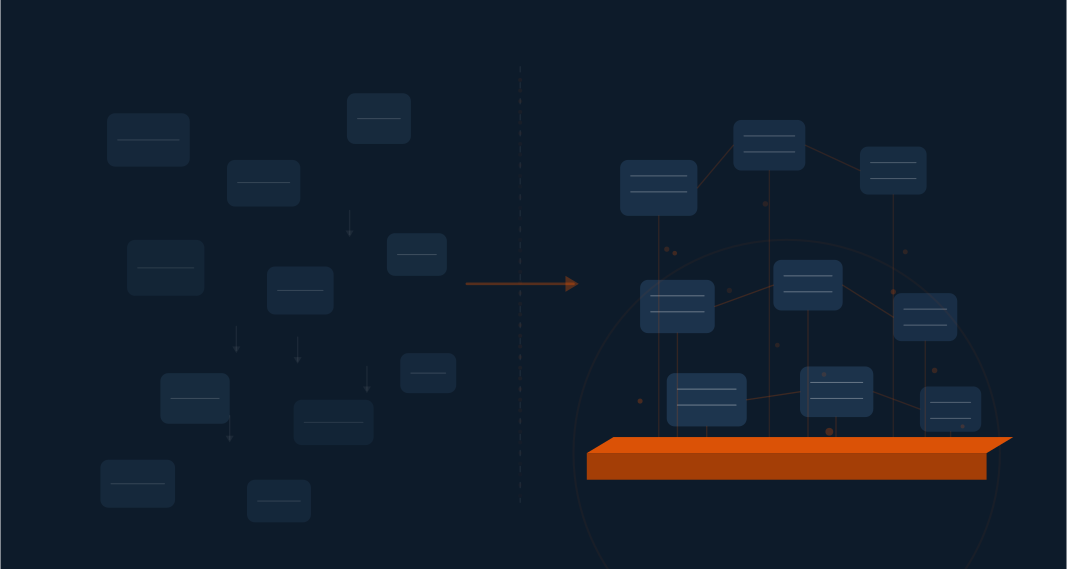
Sales would look at this content and quietly build their own decks. Services would surface a brilliant client outcome and it would sit in a Slack thread, never reaching the marketing calendar. The result was three teams generating three different narratives about who we are and what we do.
The waste wasn't just in duplicated effort. It was in missed signal. Sales knew which use cases were resonating in conversations. Services knew which engagements produced outcomes worth talking about. Marketing had the distribution muscle but was pointing it at the wrong targets.
What We Built To Fix It
We developed an internal methodology we call Chaos Hacking. It's an 8-step process that forces alignment before anyone writes a word of copy or books a webinar slot.
The sequence matters. Each step feeds the next.
- Step 1: Sales signal alignment. We start by sitting with Sales to understand their current focus areas. What are they hearing? Which verticals are active? What objections keep coming up? We align campaign themes to short and long-term sales objectives. Not marketing objectives. Sales objectives.
- Step 2: Sales-driven use cases. From those signals, we identify communities and platforms where Sales is already active. We find use cases that resonate in those spaces.
- Step 3: Service-driven use cases. We go to Services next. What are the strongest recent delivery stories? Which engagements produced results that map to the use cases Sales identified? This is where content gets real. It's grounded in work we actually did.
- Step 4: Marketing workshop. Now marketing enters. We run a cross-functional session covering content strategy, personas, messaging, and goals. But the inputs are already shaped by Steps 1 through 3. Marketing isn't inventing the narrative. It's organizing one that already exists.
- Step 5: Content calendar. We build a minimum 3-month plan covering blogs, gated content, video, case studies, landing pages, and webinars. The critical constraint: both Services and Sales must co-sign this calendar. If Sales won't use it and Services won't stand behind it, it doesn't ship.
- Step 6: Distribution workshop. Channels aren't chosen from a best-practices checklist. They emerge from the communities identified in Steps 2 and 3. We build targeted lists from those communities, existing accounts, and active channels. Distribution is precise, not broad.
- Step 7: Execution calendar. Use cases get mapped to communities and platforms with clear timelines and owners.
- Step 8: Ops integration. Dashboards, performance metrics, execution monitoring. This step is the one most teams skip. Without it, the framework runs once and then decays. Ops integration is what makes it repeatable.
Why Starting With Sales Changes Everything
The counterintuitive part of this framework is Step 1. Most marketing planning starts with brand positioning, audience research, or content audits. We start with a sales conversation.
This isn't because Sales is more important than Marketing. It's because in a services company, Sales is closest to the signal. They know which problems prospects are actually trying to solve right now. They know which use cases make a prospect lean in during a call. That signal is perishable and it's often trapped in individual conversations.
When marketing campaigns are built on top of live sales intelligence, content stops being theoretical. It becomes ammunition that Sales actually wants to use.
What's Still Hard
This framework requires execution discipline. The workshops take real time from people who have delivery responsibilities. The co-sign requirement on the content calendar creates friction. Step 8 is genuinely difficult to maintain when the team is small and execution speed matters more than measurement rigor.
We haven't perfected this. The framework works best when the full cycle runs without shortcuts, and shortcuts are always tempting.
What You Can Take From This
If your marketing team is producing content that Sales doesn't use, the problem probably isn't the content. It's the input. Start your next campaign planning cycle with a 30-minute sales conversation. Ask two questions:
- What use cases are resonating in your pipeline right now?
- What objections do you keep hearing?
Build your content calendar from those answers. Then ask Services to validate that you can actually back up those use cases with delivery evidence. The alignment won't be perfect, but it will be real. And real beats polished every time.
Want A Closer Look At How Chaos Hacking Works In Practice?
Talk to our team about aligning your content engine with your pipeline.
```
Bring this dispatch into a working session - one page in, scoping memo out.
Brief Foyer