
Pro sports is building fan data platforms: one place where ticketing, streaming, app and in-venue data become a single view of each fan, and that view drives personalized engagement at scale.
Participation organizations need the same thing, but the subject is different. A participant doesn't just watch. They register, train, race, certify, renew and bring friends. We call the result a participant data platform, and we think it is best built as a loop rather than a stack.
Why data has become the edge
Participation sports doesn't have a demand problem. It has a memory problem. US race participation grew about 5% in 2025, yet only 17.2% of 2024 participants returned to the same event, and just 7.1% in triathlon. Most organizers know a participant for one transaction and then lose them.
In IBM’s 2025 survey of more than 20,000 sports fans across 12 countries, 30% identified personalized content as a top priority for AI. These are fan expectations, not direct evidence of participant behavior.
Registrations arrive earlier than ever: in the first half of 2026, 16.4% of US race registrations came more than 120 days before race day, and more than half of marathon registrations did. That's a long relationship window, and most organizations fill it with generic emails because no single system knows who the participant is. Filling that window well is the job of participant-intent personalization.
From fan data platform to participant data platform
The fan data platform model has seven capabilities: touchpoints where fans engage, real-time ingestion of data from those touchpoints, data mastering into one identity, enrichment with outside data, behavioral insights, journey orchestration across channels, and reporting that closes the loop.
All seven apply to participation. What changes is what they work on.
Touchpoints include registration, training plans, course pages, results, the store, the partner portal used by dive centers, clubs and coaches, and the event itself.
Ingestion has to handle event data that changes constantly: start lists, wave times, course changes, results on race day.
Mastering has to resolve not just consumers but roles. The same person can be a student, a certified diver, an instructor and a dive shop owner, or an athlete, a volunteer and a club organizer.
Enrichment comes from first-party sources most organizations already hold: finish times, certification levels, training data shared with consent, and partner bookings.
Insights are about progress, not preference: who is ready for a longer distance, who is about to lapse, who is likely to become a professional member. Those progress signals are the raw material for membership models that keep participants coming back.
Orchestration has two audiences: the participant, and the partner who will teach, coach or host them next. The partner side of orchestration is also where sponsor value climbs from visibility to verified outcomes.
Reporting should measure return and lifetime value, not reach.
Why we build it as a loop
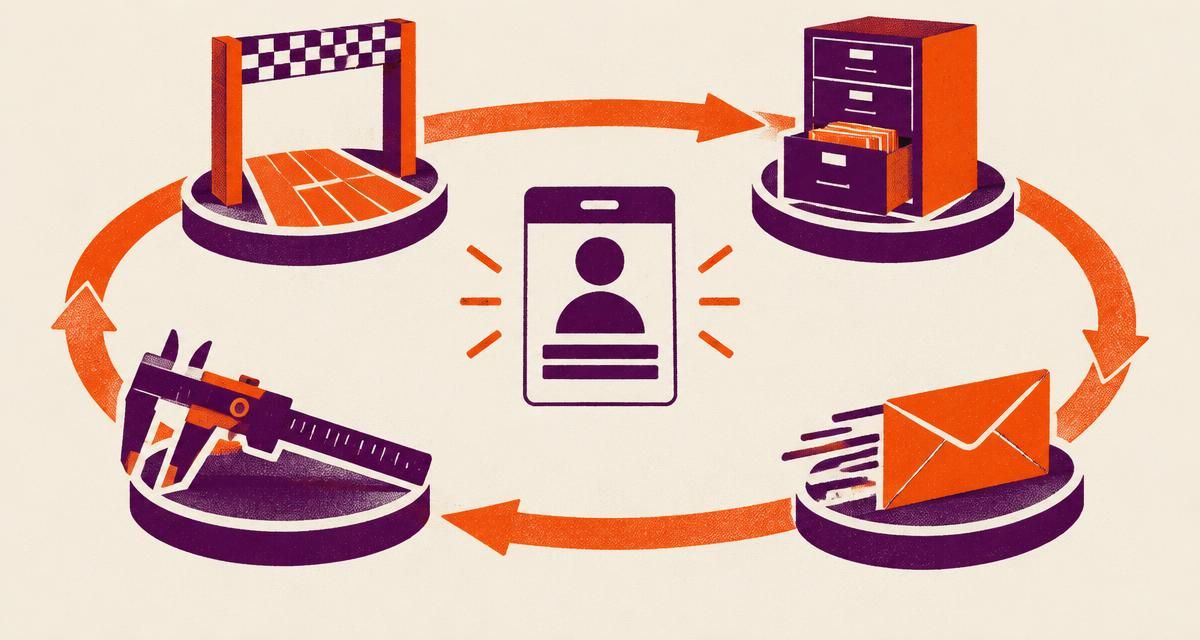
Axelerant's framework organizes digital work into four layers: Experience, Data, Activation and Optimization. We run them as a loop, not a line. Experience generates the data, data sharpens activation, activation enriches the experience, and optimization feeds every learning back so each turn compounds. The same loop shapes our approach to every engagement.
That ordering matters for a participant data platform. The most common failure we see is buying a customer data platform before the experience layer produces clean data. You cannot activate what you cannot resolve, and you cannot resolve data that a fragmented experience never captured cleanly. The assessment determines the architecture, and the architecture determines the platform, not the other way around.
Mapped to the loop, the seven capabilities sit like this. Touchpoints are the Experience layer. Ingestion, mastering and enrichment are the Data layer. Insights and orchestration are Activation. Reporting and experimentation are Optimization, and they feed the next turn.
Every capability sits on the loop. Journey orchestration feeds the next turn, so the platform gets richer each time around.
What it looks like in practice
Two of our engagements show different parts of the loop.
For a global endurance event portfolio, the work started in the Experience layer and moved into Data and Optimization.
Brand sites that had lived on disconnected stacks now share one governed codebase on CMS, so every brand captures data the same way.
Event data that used to be pulled in bulk by scheduled jobs, causing duplicates and overwrites, now arrives by webhook from the CRM, sending only what changed.
The published IRONMAN case records 99.99% race-day uptime. This proves the operational foundations of the experience, not a complete participant data platform. Read the full IRONMAN engagement.
For an anonymized certification and membership program, the target is a unified view of members, students, professionals and partner centers across CRM, commerce, learning, club and subscription systems. Identity resolution is a design requirement, not a claim that the work is complete.
On top of that sits lifecycle activation: behavior-based journeys for certification, renewal, reactivation and cross-sell, and a partner experience for the centers that sell and teach on the organization's behalf.
The Experience layer is being unified around three core journeys, getting started, progressing and going pro, so the data the program depends on is captured consistently from the start.
Neither engagement started with a platform purchase. Both started with the question of what the experience needed to produce.
The endurance portfolio proves the Experience and Optimization end of the loop; the certification body's program is building the Data and Activation end.
The platform choices are secondary
A participant data platform is a capability, not a product. We've seen it assembled from different parts: Drupal and Acquia for the experience layer; Salesforce Data Cloud, HubSpot or a warehouse such as Snowflake for identity and data; Marketing Cloud or HubSpot for orchestration; commercetools, BigCommerce or Magento for commerce.
The right combination depends on what's already in place, who will run it and where the organization wants to be in three years.
What doesn't vary is the sequence: clean experience, one record, a small number of journeys that matter, and measurement that feeds back.
Each step has a gate before the next. Skipping to a data platform purchase is the most common way these programs stall. The same clean record is what makes AI agents safe to deploy for participants.
What leaders should do now
Map the loop you have. For each of the seven capabilities, write down which system does it today, if any. Gaps with no owner are where the loop breaks.
Fix capture before you buy. If your touchpoints capture the same person differently, a new data platform will inherit the mess.
Resolve roles, not just people. Decide how one person who is a participant, a member and a partner will be represented, before you design journeys for any of them.
Start with two journeys. The post-race or post-certification moment, and the renewal or re-registration moment, usually carry the most value.
Measure return. The number that tells you whether the loop works is the share of participants who come back, to anything you run. We apply this loop across sports, adventure and endurance programs.
The road ahead
AI will make the activation layer far more capable: assistants that answer in context, journeys that adapt to each person, and agents that act on a participant's behalf. All of it depends on the loop underneath. The organizations that build the participant data platform as a loop, rather than buying it as a stack, will find each turn makes the next one cheaper, smarter and more personal.
Sources
Explore the participant relationship
Sports: Adventure & Endurance, including published IRONMAN and PADI work
Sports Personalization Starts Before the Start Line
Participation Sports Sponsorship: The Value Ladder
Participation Sports Memberships: Sell the Year
AI Agents in Participation Sports: Start With Guardrails
Discuss the first participant journey to test
Bring this dispatch into a working session - one page in, scoping memo out.
Brief Foyer