

About
Founded in 1873 and headquartered in Wisconsin, Kohler Co. is a global leader in the manufacturing of kitchen and bath products, engines, power systems, and luxury cabinetry.
Through the Kohler Foundation and charitable initiatives, the company uplifts communities worldwide. Its efforts in promoting arts, education, and environmental stewardship exemplify Kohler's vision of making a difference beyond business.
Client Pulse Survey
Experience working with the Axelerant Kohler team
Delighted.
Every response, one register: delighted. Not satisfied, not neutral. Delighted.
“So far we’re happy with the way things are going with the team. Thank you all for the engagement so far.”
Kohler’s Journey To Seamless Global Experiences
Kohler, a global design and manufacturing leader in kitchen and bath solutions, has long been synonymous with craftsmanship and timeless luxury. Yet, its digital ecosystem didn’t reflect the same precision and modernity that defined its products.
While Kohler’s brand equity was strong, its global web experience operated as fragmented regional microsites — each with its own content, technology, and structure. The disconnect was not only visual but strategic: the brand inspired consumers, but didn’t effectively channel that inspiration toward its distribution and dealer networks.
The goal was not to sell online — it was to create a seamless experience that connects emotion (B2C) with activation (B2B).
Kohler partnered with Axelerant to reimagine its digital foundation: a unified, experience-led platform designed to inspire, educate, and convert users into qualified leads for partners worldwide.
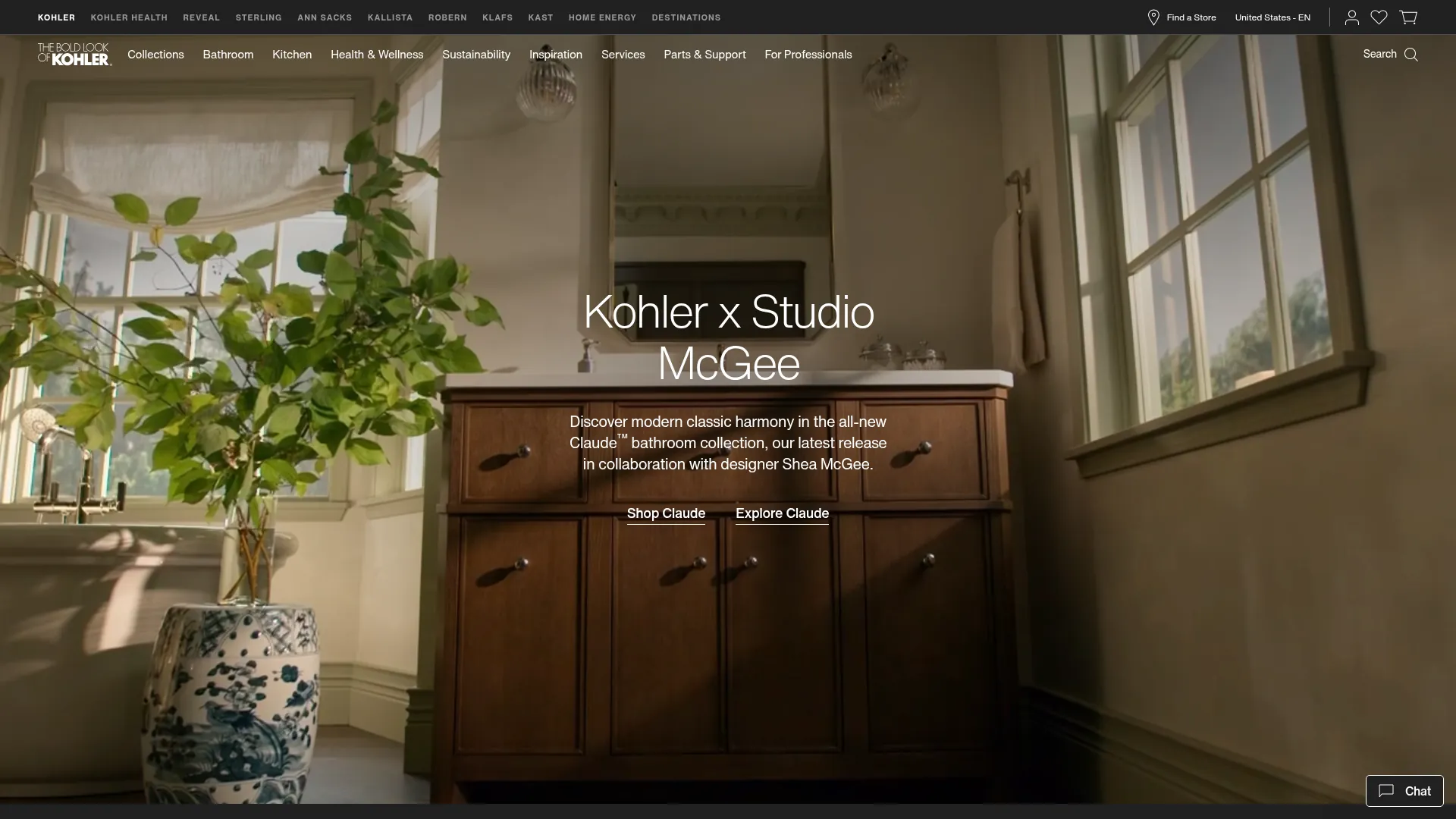
Kohler’s challenge was not about eCommerce — it was about influence and intent.
The brand needed a digital system capable of turning engagement into activation without disrupting its dealer ecosystem.
- Disjointed global web presence with varying UX standards and localized brand interpretations.
- No unified customer journey connecting inspiration, exploration, and partner engagement.
- Lack of personalization or behavioral data to inform content relevance or conversion design.
- Inconsistent performance and mobile optimization across markets, affecting brand perception.
- Weak connection between digital engagement and partner lead flow, limiting visibility into ROI.
Kohler needed a conversion-centered experience that maintained its premium feel but delivered measurable results — in the form of leads, appointments, and distributor engagement.
Axelerant led a comprehensive transformation spanning user journey mapping, design strategy, content modeling, platform engineering, and conversion optimization — with a single unifying goal:
Transform Kohler’s digital presence into a connected influence engine that drives measurable partner activation.
User Journey Mapping — From Inspiration to Partner Engagement
We began by defining the end-to-end journey — understanding both consumer motivations and partner dependencies.
Our analysis revealed two primary journey archetypes:
1. Homeowners and Designers (B2C influence path) – Visitors seeking inspiration, design guidance, or product discovery. Their emotional journey started with aspiration — “I want my space to feel like this” — and moved toward confidence — “I trust this brand to make it real.”
2. Dealers, Distributors, and Trade Professionals (B2B conversion path) – Users looking for specifications, installation details, or lead generation — aiming to transform online demand into tangible sales opportunities.
Mapping these journeys highlighted the conversion inflection points — moments when a visitor shifts from exploration to action:
- Viewing a specific collection or product finish.
- Locating a nearby showroom or installer.
- Submitting a design consultation or project request.
These insights shaped both the information architecture and conversion flow, ensuring the experience intuitively guided users from inspiration to the most relevant form of engagement — without friction.
Design Strategy — Functional Luxury, Digitally Expressed
Kohler’s design philosophy of gracious living was translated into a digital principle: “Functional Luxury.”
This meant creating a site that felt premium — yet performed with precision and clarity.
- Visual Confidence: Photography-driven layouts and cinematic imagery showcased Kohler’s design leadership.
- Motion as Rhythm: Transitions mimicked the flow of water — subtle, fluid, reassuring.
- Tactile Precision: Micro-interactions and hover states brought a sense of craftsmanship to every touch.
- Conversion Embedded in Elegance: Calls to action (“Book a consultation,” “Find a dealer,” “Explore collection”) were integrated within visual storytelling — never intrusive, always natural.
- Mobile-First Experience: Optimized navigation and performance ensured users could explore products, galleries, or dealer maps effortlessly across devices.
The result was a digital aesthetic that breathed luxury while guiding behavior, turning emotional engagement into measurable action.
Content Strategy — Connecting Storytelling to Distribution
Content became the connective tissue between brand inspiration and partner conversion.
Axelerant developed a scalable content strategy and taxonomy that linked narrative depth with transactional clarity.
- Experience-Led Architecture: Structured content into three connected layers — Inspire (stories, spaces), Discover (collections, materials), and Act (consult, locate, purchase).
- Localization Framework: Enabled global teams to adapt stories, campaigns, and calls-to-action based on regional product lines and dealer availability.
- SEO and Discoverability: Rebuilt metadata and content relationships to boost organic visibility and intent-driven discovery.
- Editorial System: Empowered marketing teams to publish lifestyle content that flows directly into product and dealer journeys.
- Behavioral Personalization: Content surfaced dynamically based on user geography and browsing behavior — ensuring every region saw relevant products, visuals, and CTAs.
This strategy reframed content from brand expression to conversion storytelling — influencing preference while driving to channel partners.
Platform Engineering — Unified Experience, Global Scale
Axelerant architected a Drupal-based global platform designed for flexibility, governance, and scale across markets and product divisions.
- Multi-site Global Architecture: A shared Drupal core supporting regional variations and product lines.
- Design System Implementation: Component library with reusable tokens for visual and functional consistency.
- API Integration Layer: Connected CMS with CRM, dealer locators, and campaign management systems.
- Performance and Accessibility: Achieved a 40% improvement in site load times with optimized caching, CDN, and accessibility standards.
- Scalable Content Governance: Role-based permissions allowed regional editors to manage local content while preserving brand alignment.
The new platform united storytelling, product exploration, and partner connection into a single digital system — a luxury experience engineered for agility and insight.
Conversion Strategy — Influence Meets Activation
Rather than focusing on “add-to-cart,” Kohler’s conversion strategy focused on micro-conversions that signaled real intent — connecting digital behavior to dealer engagement.
Axelerant embedded an ongoing optimization framework:
- Conversion Funnel Design: Mapped high-intent actions — brochure downloads, consultation bookings, store locator interactions, and product inquiries.
- Dynamic CTAs: Adjusted calls-to-action based on user type, location, and product category.
- Form Simplification: Reduced friction by auto-filling region and interest data from browsing history.
- Lead Handoff Automation: Integrated CRM workflows routed leads to the nearest distributor or showroom instantly.
- Insight Loop: Conversion dashboards visualized regional engagement metrics, allowing continuous optimization across campaigns and content types.
This created a closed-loop conversion ecosystem — every interaction, from page view to dealer visit, became measurable and improvable.
Kohler’s new digital ecosystem became a conversion and brand influence engine that strengthened both consumer engagement and partner growth.
- 70% AWS cost reduced by auditing and optimizing storage, support packages, and services.
- 90% malicious traffic blocked using Akamai’s Web Application Firewall (WAF) and bot management tools, reducing system strain and eliminating bot-related downtimes.
- 30%-40% faster deployments achieved through Kubernetes, Helm, and Terraform, enabling zero-downtime releases.
- 40% faster content updates delivered through improved load times, dynamic frontend, and enhanced navigation.
- Consistent brand expression across 20+ regional sites through shared design tokens and governance.
- Increased organic engagement from design professionals and homeowners, establishing Kohler.com as the definitive inspiration-to-action hub.
Kohler’s digital transformation now operates as a B2B2C ecosystem — not just showcasing products, but shaping how global audiences connect to the brand and its partners.
Project Highlights
Optimized Infrastructure For High Availability
The new AWS-based architecture is designed for performance and reliability. It features Application Load Balancers for traffic distribution, Auto-Scaling Groups for dynamic EC2 instance scaling, and shared storage through Amazon EFS.
Amazon RDS ensures robust database management, while S3 with lifecycle policies optimizes backups and storage costs. The integrated Amazon OpenSearch Service supports analytics, and AWS Certificate Manager secures communications.
Next.js Deployment In EKS
Configuring a minimum of two pods for Next.js in EKS with Horizontal Pod Autoscaler (HPA) ensured high availability, fault tolerance, and load balancing. This helped the website handle traffic spikes and maintain consistent performance.
This setup also minimizes downtime, supports zero-downtime updates, and optimizes resource utilization by scaling pods dynamically based on demand.
Drupal 10 In EKS
The Drupal 10 website is hosted within a Kubernetes cluster on AWS Elastic Kubernetes Service (EKS), ensuring high availability, scalability, and performance.
The architecture is designed with two minimum pods for the Horizontal Pod Autoscaler (HPA). Each pod includes NGINX for request handling and PHP-FPM for Drupal processing, ensuring smooth operation and rapid response times.
Ask anything about how we ran KOHLER - or what it would look like for you.
Foyer is grounded in our own playbooks and the named work behind this record. Go deep on the methodology, the decisions, the team shape - or bring your own problem statement, use case, or intent and we'll talk it through against retail engagements.
Have a similar shape on your plate? We'll come back with how we'd run yours.
The KOHLER engagement moved 40% faster load times. If your situation rhymes, send us the brief and a named delivery lead will respond inside one business day.
A short brief. A named partner replies within one business day.
Six quick fields. Nothing you would not tell a colleague in a hallway.
Replied to by a named partner within one business day.