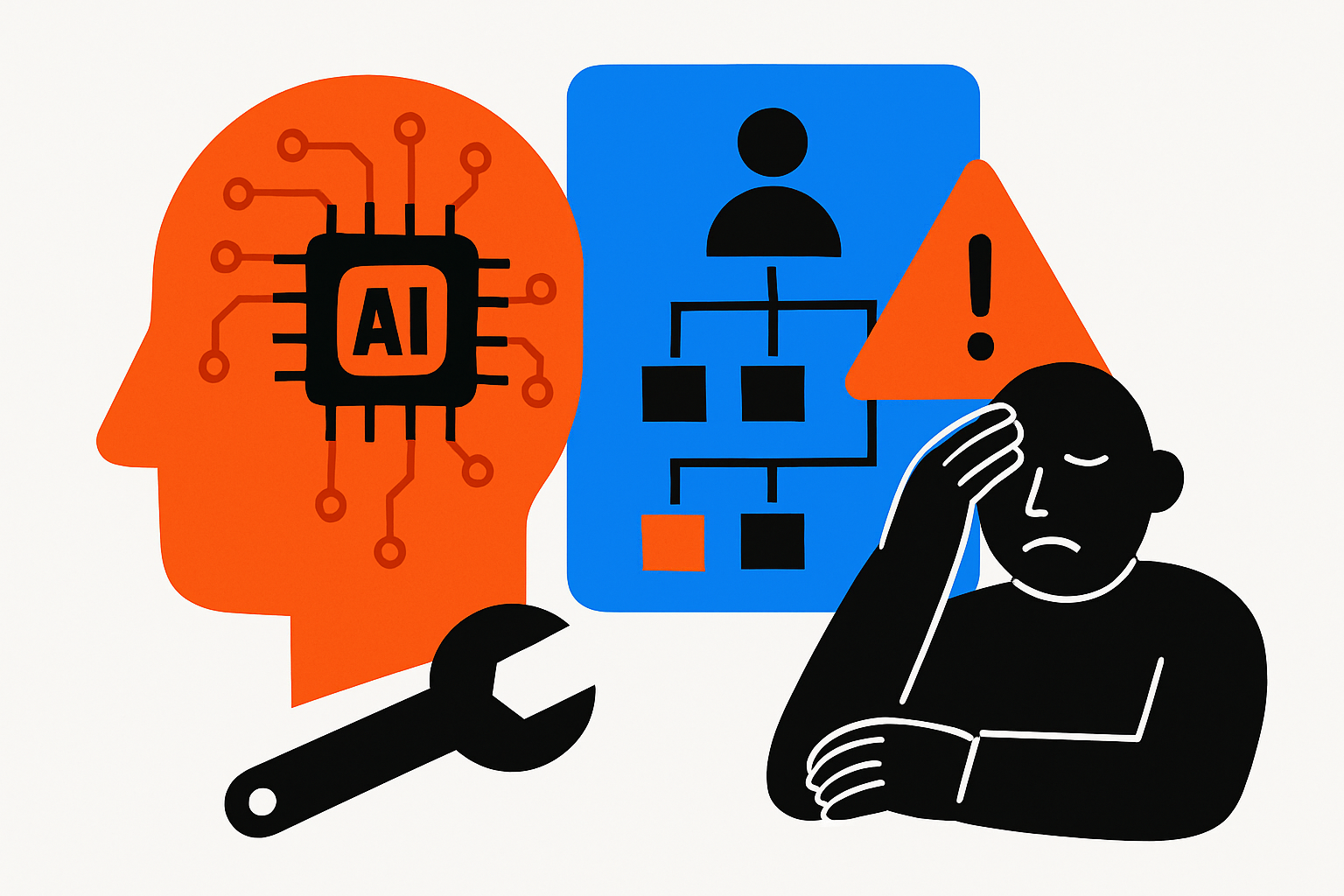
Across multiple industry analyses, roughly 95% of AI initiatives fail to reach production impact. Not because the models are bad. Because organizations skip the structural work that makes AI functional: role design, approval flows, audit trails, metadata governance. They buy the tool. They skip the AI operating model.
Every month, Axelerant publishes a newsletter that documents what happens when you do this work in the correct order. Not announcements. The operational record of what we built, what we shipped to clients, and what broke along the way.
Here is what one issue looks like. Three stories. One pattern. And a few details we are saving for subscribers.
Story One: 2TB Of Assets, Zero Governance, One Award
A consumer cooperative in the UAE had accumulated roughly 2TB of creative assets scattered across laptops, shared drives, and Magento exports. No metadata standards. No approval trail. No clarity on who owned what. This is a textbook case of what digital debt looks like before anyone names it.
The instinct is to pick a DAM platform and start uploading. Axelerant designed the governance architecture first. The newsletter covers what that architecture looked like, including how approval authority was structured and what the audit trail traces. Once the governance model existed, the tooling decision became straightforward. Acquia DAM and Workflow App operationalized a governance model that already worked on paper — the tooling came second, not first.
The result won "Best Use of Asset Management and Content Workflow" at Acquia Engage Denver. The award was not for the tool. It was for the operating model the tool sat inside. You can read the full project record in the Union Coop digital asset transformation case study.
Story Two: The Timesheet Tool Nobody Asked For — And Why It Changed Everything
Engineers spent 30 to 45 minutes weekly reconstructing timesheets by toggling between Jira, GitHub, and Google Calendar. The data existed in three systems. None of them talked to each other.
One engineer built a reconciliation tool using Claude. It pre-populates draft timesheets where every line traces to a verifiable artifact: a pull request, a ticket transition, a calendar event. Ambiguous data gets flagged rather than guessed. Engineer time dropped to 5 to 15 minutes per week.
The important metric is not time. It is trust. Every entry now has a provenance trail. This is the same principle behind what an autonomous agent taught us about governance — auditability is not optional when AI generates outputs that humans act on.
The newsletter covers how the tool handles ambiguity and where it still breaks.
Story Three: A Plugin That Crossed The Aisle
The Axelerant marketing team built a campaign-engine plugin, ran it through two full campaign cycles, then handed it to Revenue. Within days, Revenue used it to produce a UK lookalike account list, per-account research, a campaign plan, and ad assets. The plugin worked because the operating model was already embedded in its structure. This is how internal AI plugin marketplaces create compounding returns — tools built for one team become infrastructure for the next.
The newsletter covers the handoff, what Revenue changed, and what marketing learned from watching someone else use their tool.
The Pattern: Why AI Operating Model Governance Must Come First
AI operating model governance follows the same sequence every time: governance architecture first, tooling second, feedback loop third. Organizations that start with tooling never reach the feedback loop. They announce. They do not iterate.
Story What Got Designed First What Tooling Operationalized What Feedback Changed UAE DAM Metadata taxonomy, approval flows, audit trail Acquia DAM + Workflow App Details in newsletter Timesheet Tool Rule: every line traces to a verifiable signal Claude-powered reconciliation across 3 systems Engineers refine signal mapping through review Campaign Plugin Operating model encoded into plugin structure Two internal cycles before cross-team deployment Revenue team's usage reshaped the original model
This newsletter is the operational record of an organization that builds AI-powered tools, ships enterprise content platforms, and writes down what actually happened. Written by the people who do the work. If you want to understand how enterprise AI scaling actually works — not in theory, but in production — this is the record.
One issue. Once a month.
The full versions of these three stories are in the newsletter, including the governance architecture from Story One, the ambiguity-handling logic from Story Two, and the cross-team feedback details from Story Three. Subscribe here and get next month's issue.
Frequently Asked Questions About AI Operating Model Governance
What is an AI operating model, and why does it matter before selecting tools?
An AI operating model is the structural framework that defines role design, approval flows, audit trails, and metadata governance before any AI tool is deployed. It matters because AI tools without an underlying operating model cannot scale — they produce outputs with no provenance, no accountability structure, and no mechanism for iteration. The tool is only as reliable as the governance architecture beneath it.
Why do 95% of AI initiatives fail to reach production impact?
The primary reason AI initiatives fail is not model quality — it is the absence of governance architecture. Organizations that start with tooling selection skip the structural work required to make AI outputs trustworthy and auditable. Without defined approval flows, metadata standards, and feedback loops, AI tools stall at the proof-of-concept stage and never reach enterprise-wide deployment.
What is metadata taxonomy design, and how does it enable digital asset management governance?
Metadata taxonomy design is the process of defining a structured classification system for digital assets — specifying what attributes every asset must carry, who can approve changes, and how ownership is traced. In digital asset management governance, metadata taxonomy is the foundation: without it, 2TB of assets remains 2TB of noise regardless of which DAM platform you deploy.
How do you build a provenance trail into an AI-generated output?
A provenance trail in AI-generated outputs means every line of output links to a verifiable source artifact — a pull request, a ticket transition, a calendar event, or a documented decision. Ambiguous data should be flagged for human review rather than auto-resolved, preserving the integrity of the audit trail. This is the design principle behind Axelerant's Claude-powered timesheet reconciliation tool.
What is the correct sequence for enterprise AI scaling?
The correct sequence for enterprise AI scaling is: governance architecture first, tooling selection second, feedback loop third. Skipping to tooling without governance produces AI deployments that cannot be audited, cannot be handed off across teams, and cannot improve systematically over time. Each of the three case studies in this newsletter follows this sequence explicitly.
Bring this dispatch into a working session - one page in, scoping memo out.
Brief Foyer