
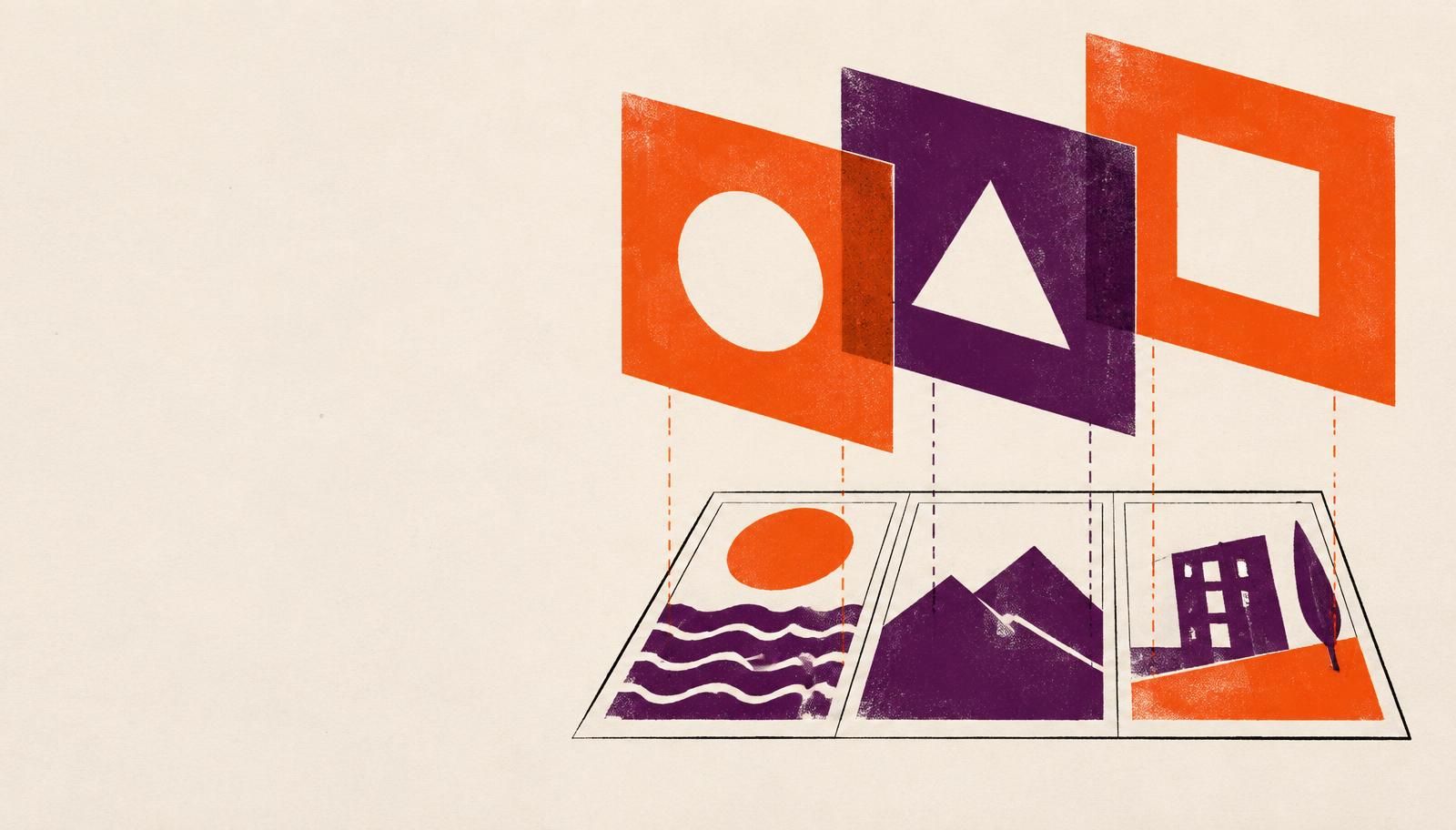
The layer over stages five, six, and seven. The question it answers: what should adapt, for whom, based on which signal?
Every brief mentions it. Leadership has seen it work elsewhere and wants the homepage to know who is visiting. The instinct is reasonable and the sequencing is usually wrong.
Personalization adapts a journey. If the journey has not been structured, the visitor cannot find what would be personalized. If the site is not discoverable, the visitor never arrives. If conversion is not instrumented, nobody can tell whether the adaptation helped. That is why, in the eight-stage framework, personalization is drawn as a layer over being found, the conversion, and the system rather than as a stage of its own. A website personalization strategy is the last thing designed and often the first thing that pays back, precisely because the layers under it are already sound.
Start from the signal the business already has
Most organizations assume personalization requires data they do not have. The opposite is usually true: they have unusually strong signal and it sits in silos.
On a global certification body's estate, the signal was rich by any standard. Customers were identifiable once logged in. Progression through certification levels was predictable and event-based. Geography was meaningful, because the activity is seasonal and regional. Purchase history existed. None of it was connected to the website experience, so the site treated a twenty-year member and a first-time visitor identically. The thesis of the personalization strategy was not "collect more." It was disciplined activation of what the business already knew.
The same is true of a manufacturer with a branch network. Professionals have accounts. Homeowners who have contacted a branch have a record. Regions have different products, seasons, and promotions. The signal exists. The strategy is about which of it to use, in what order, on whose behalf.
The framework has six parts, in a fixed order
A personalization framework that is a list of ideas is a backlog. One that is a structure can be governed. The framework we use has six parts, and the order matters because each depends on the one before.
Foundations. The principles the program will not violate, and the intent signals it will read: explicit (what a visitor tells you through search, stated goals, or account) and implicit (what their behavior shows through location, referral, and session). One founding principle on the certification body's program: build for the large anonymous majority first, then layer targeting for the small minority with strong signal.
Model. How signals become decisions. Three layers plus real-time activation, described below.
Application logic. How a decision becomes an action on the page: next-best-action rules, modular content that can be swapped by segment, and what happens when two rules conflict.
Use cases. The specific on-site and lifecycle plays, each mapped to the data points it needs, so no use case is proposed without its signal.
Data and systems. Where each signal actually lives: analytics, account system, customer data platform if one exists, commerce system of record, partner and community channels.
Roadmap. Which use cases ship in which phase, gated by which systems and signals arriving.
The model has three layers, and the first two need no new infrastructure
The model layer is where most programs overreach. They design for the full customer-data-platform vision and ship nothing for a year.
Behavior-backed. Location, cookie preference, session behavior. Activatable with the infrastructure almost every site already has. On the certification body's site this meant geography driving seasonal specialties and regional relevance from day one, with explicit intent matched first and context layered afterward.
Data-backed. What the business already holds about identified visitors: certification history, profiles, purchase data, existing marketing segments. Activatable once the account system talks to the site. No new platform required.
Journey-backed. A unified profile across channels through a customer data platform, with real-time intent detection and AI-driven next best action on top. Aspirational for most organizations, and correctly placed last.
The first two layers are where the first year's value is. A website personalization strategy that cannot ship anything until the third layer exists has been designed for the vendor, not the visitor.
Build for the anonymous majority first
Analytics cannot segment anonymous visitors by persona. The persona is not observable; only behavior is. On the certification body's site, the anonymous state existed almost entirely for prospects, the growth audience, which meant the audience the redesign most needed to win was the one about whom the site knew least.
The discipline that follows: design the default experience for the anonymous visitor using behavior-backed signals, and treat identity-based personalization as an enhancement for the minority who are known. Programs that invert this, designing rich experiences for logged-in customers and leaving the anonymous default untouched, personalize for the people who were already going to convert.
For a manufacturer the anonymous majority is the homeowner who has not yet contacted a branch. Their location, their referral source, and what they look at first are the only signals available, and they are enough to sort them toward the right region, the right product family, and the right next step.
Every program hits the same three constraints
Whether or not a personalization strategy plans for them, three constraints arrive.
Identity. Signal availability depends on a unified identity, and unified identity is usually its own program on its own timeline. On the certification body's roadmap, several use cases waited on an identity project scheduled for a later phase. Naming that dependency in the roadmap is what keeps the program honest.
System of record. Value-based plays, offers, pricing, and loyalty, depend on the commerce system being the source of truth. Until it is, the site cannot personalize on value without contradicting the transaction.
Discipline. The temptation to personalize for the identifiable few because it demos well. The counter is the founding principle: anonymous majority first.
The framework is a hypothesis until the goals are time-bound
A strategy document is the agency's best reading of the business. It is not confirmed until the business has said what it wants personalization to move, by when. On the certification body's program, the framework was presented explicitly as a hypothesis, the goals were made time-bound before use cases were finalized, and requirements were mined in workshops rather than received as a specification. That is the right posture. Personalization strategy owned by the vendor is a roadmap for the vendor's tooling.
What the personalization layer hands over
- The foundations: principles and the intent signals, explicit and implicit, the program will read.
- The three-layer model with what each layer needs and which layers are activatable now.
- Application logic: next-best-action rules, modular content plan, conflict resolution.
- The use-case library, each mapped to its data points and its layer.
- The data and systems map: where each signal lives and which system is the source of truth for what.
- The roadmap, gated by identity and system-of-record dependencies.
- The time-bound goals the business owns.
What breaks when the layer is applied too early
Personalization adapts a journey nobody can find or complete, and the program is blamed for a structure problem.
The strategy is designed for the customer-data-platform vision, ships nothing for a year, and loses its sponsor.
The identifiable few get a rich experience, the anonymous majority get the default, and the growth audience is served last again.
Value-based plays contradict the transaction because the commerce system was never made the source of truth.
Where this sits in the sequence
Personalization sits on stages five, six, and seven. It inherits the anonymous-versus-known map from stage two, the journeys from stage three, the structure and modular content from stage four, and the instrumentation from stage six, without which no adaptation can be proven at stage eight.
Questions we get asked about website personalization strategy
Can you do website personalization without a CDP?
Yes, and you should start there. Behavior-backed signals (location, referral, session) and data-backed signals (what the account system already holds) cover most first-year use cases with existing infrastructure. A customer data platform enables the third layer, unified cross-channel journeys, and belongs later in the roadmap.
How do you personalize for anonymous visitors?
On behavior, because identity is not observable. Location, referral source, and what they look at first are enough to route an anonymous visitor toward the right region, product family, and next step. Design the default for them first; treat identity-based personalization as an enhancement.
What should a personalization framework include?
Six parts in order: foundations (principles and signals), a model (how signals become decisions), application logic (how decisions become page actions), use cases mapped to their data, the data and systems map, and a roadmap gated by dependencies. A list of use cases without the other five is a backlog, not a framework.
When in a redesign should personalization be planned?
Designed last, after structure, discoverability, and conversion are sound, because it adapts a journey those stages create. Planned early enough that the content model is modular and the instrumentation can measure the adaptation.
Read next in the series
The full sequence is set out in the pillar guide, Digital Brand Strategy: Eight Stages From Baseline To Proof. Each stage has its own article.
- Stage 01, the target. What are we trying to move, and where does it stand today?
- Stage 02, the audiences. How do we serve a second audience without breaking what works for the first?
- Stage 03, the journey. Where does someone fall out between interest and a conversation?
- Stage 04, the structure. What do we call things, and what varies across every local site?
- Stage 05, being found. Strong nationally, weak on near me. How do we fix that specifically?
- Stage 06, the conversion. How does a visit become a qualified lead at the right location?
- Stage 07, the system. How do we get a design system your own team keeps building with?
- Stage 08, the proof. How will we know, with data, that any of this worked?
- The personalization layer. What should adapt, for whom, based on which signal? You are reading it.
Bring this dispatch into a working session - one page in, scoping memo out.
Brief Foyer