Introduction
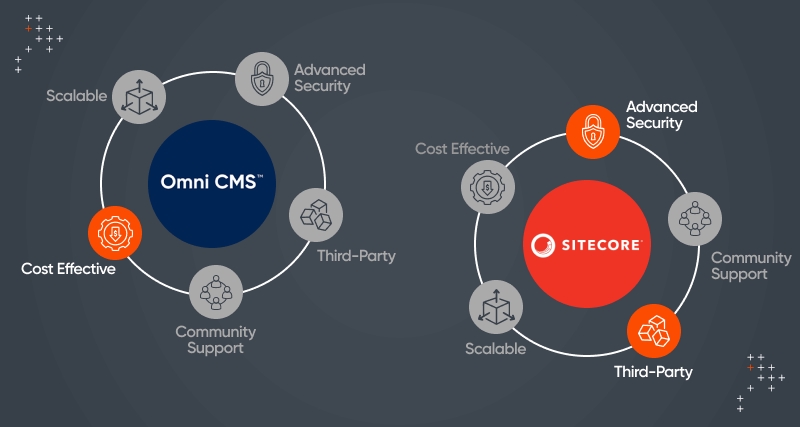
While Sitecore and Omni CMS are robust platforms widely adopted in the higher education sector for their extensive content management capabilities, they are not without their limitations. Despite their strengths, institutions may encounter challenges in fully realizing the potential of these CMS solutions for higher ed personalization.
Personalization in higher education goes beyond simply addressing students by their names. It involves delivering tailored content and digital experiences that cater to individual needs and preferences, which in turn helps enhance student engagement, recruitment, and retention.
Read more to explore the specific limitations of Sitecore and Omni CMS, including complexity, scalability, integration, and cost. Understanding these constraints is crucial for institutions aiming to optimize their digital strategies and elevate the student experience.
Why Is Personalization Important For Higher Ed Institutions?
Personalization plays a critical role in transforming various aspects of higher education. Here are some key areas where personalization makes a significant impact:
- Student Recruitment:Personalization helps attract prospective students by providing information that matches their interests. According to a survey, 84% of students agree that receiving personalized admission messages is an important factor when choosing a school.
- Student Engagement:Personalized experiences can significantly boost student engagement by making content more relevant and interesting.
- Student Retention: It helps maintain student satisfaction and support by addressing individual needs throughout their academic journey.
Crucial Elements of Higher Ed Personalization
The following five elements are instrumental in implementing personalization in higher education.
- Data Integration: Combining data from various sources to get a comprehensive view of each student.
- Content Customization: Creating and delivering content that resonates with individual students.
- User Experience: Ensuring seamless and intuitive digital experience across different platforms and devices.
- Analytics: Measuring and analyzing the effectiveness of personalization efforts to continually improve strategies.
Analyzing Sitecore’s Higher Ed Personalization Capabilities
Sitecore is a digital experience platform that helps organizations deliver highly customized and engaging digital experiences. It improves student engagement with marketing automation, seamless integrations, and insightful analytics.
Advantages Of Sitecore In Higher Ed Personalization
The following features of Sitecore will benefit Higher Ed personalization.
- Integration: Seamless integration with CRM, ERP, and LMS systems for comprehensive data use.
- Analytics And Reporting: Powerful tools for measuring personalization effectivenessand understanding student behavior.
- Marketing Automation:Effective tools for creating and managing personalized marketing campaigns.
- User Experience Customization:Deep customization capabilities for tailored student interactions.
Limitations Of Sitecore In Higher Ed Personalization
While using Sitecore for Higher Ed personalization, organizations will come across the following limitations.
- High Cost Of Implementation And Maintenance: Sitecore's personalization features come with a high price tag, making it a significant investment for institutions.
- Complexity Of Integration With Existing Systems: Integrating Sitecore with existing systems can be complex and time-consuming.
- Steep Learning Curve For Staff And Administrators: The staff and administrators often face a steep learning curve due to the extensive capabilities of Sitecore.
- Limited Flexibility In Customizing The User Experience: Despite its features, customizing the user experience is challenging and will require significant technical resources.
- Challenges In Real-time Data Processing And Personalization: Implementing real-time data processing and personalization in Sitecore can be complex and resource-intensive.
Analyzing Omni CMS’s Higher Ed Personalization Capabilities
Omni CMS, formerly known as OU Campus by OmniUpdate, is a content management system designed specifically for higher education. Omni CMS streamlines content creation and management for institutions, allowing non-technical staff to easily update and personalize websites.
Advantages Of Omni CMS In Higher Ed Personalization
The following features of Omni CMS will benefit Higher Ed personalization.
- Ease of Use: Somewhat easy-to-use interface.
- Integration: Easy integration with common higher education systems, like Student Information Systems (SIS) and Learning Management Systems (LMS).
- Template-Driven Customization:Easy-to-use templates for quick content personalization and site customization.
Limitations Of Omni CMS In Higher Ed Personalization
While using Omni CMS for Higher Ed personalization, organizations will come across the following limitations.
- Lack Of Advanced Personalization Features: Compared to other CMS platforms, Omni CMS offers fewer personalization features.
- Limited Scalability For Large Institutions With Diverse Needs: Omni CMS is better suited for small to medium-sized institutions and may struggle to meet the needs of larger higher education organizations.
- Integration Challenges With Third-party Tools And Systems: While easier than Sitecore, integrating Omni CMS with third-party tools and systems can still be challenging.
- Insufficient Support For Multi-channel Personalization: Omni CMS primarily focuses on web content. It offers limited support for multi-channel personalization.
- Difficulty In Tracking And Analyzing Student Interactions And Engagement: Omni CMS provides only basic analytics, which will not be sufficient for an in-depth analysis of student interactions and engagement.
Comparative Analysis: Sitecore Vs. Omni CMS
The following table compares the basic aspects of Sitecore and Omni CMS.
Aspect
Sitecore CMS
Omni CMS
Cost
High implementation and maintenance costs
More cost-effective, lower total cost of ownership
Learning Curve
Steep learning curve for staff and administrators
Gentle learning curve, easier for non-technical staff
Flexibility
Highly flexible but requires technical expertise
Less flexible, more template-driven
Integration
Complex but extensive integration capabilities with various systems and third-party tools
Easier integration with common higher ed systems, but limited in scope
Scalability
High scalability, suitable for large institutions with diverse needs
Limited scalability, best for small to medium-sized institutions
Real-time Data Processing
Strong capabilities but complex to implement
Limited real-time data processing capabilities
Personalization Features
Advanced personalization features but can be complex to configure
Basic personalization features, easier to set up but less advanced
User Experience Customization
Highly customizable user experience, requires technical skills
More out-of-the-box solutions, less customization needed
Support for Multi-channel Personalization
Comprehensive but requires significant setup and management
Insufficient support for extensive multi-channel personalization
Content Management
Advanced content management capabilities, but can be overwhelming for new users
User-friendly content management, easier for staff to handle
Analytics and Reporting
Powerful analytics and reporting, but can be complex
Basic analytics and reporting, easier to use but less detailed
Maintenance and Updates
Requires ongoing technical maintenance and updates
Easier maintenance with less frequent need for technical updates
Drupal And WordPress: Alternatives To Sitecore And Omni CMS For Higher Ed Personalization
To cope with the limitations of Sitecore and Omni CMS in higher education personalization, organizations can use open-source solutions like WordPress and Drupal.
Drupal
Drupal is an open-source CMS known for its flexibility and extensive customization options. Ideal for complex, large-scale websites, Drupal enables higher education institutions to create highly tailored digital experiences.
Its modular architecture, extensive library of modules, and strong community support make it a versatile choice for institutions seeking advanced personalization and scalability.
WordPress
WordPress is the world’s leading content management platform. It is known for its user-friendly interface and extensive customization options. WordPress offers a vast ecosystem of pluginsand themes, enabling seamless integration of advanced personalization features.
With strong community support and continuous innovation, WordPress empowers educational institutes to create engaging and dynamic digital experienceswith ease.
The following table compares Drupal, WordPress, Sitecore, and Omni CMS with respect to higher education personalization.
How Axelerant Helped University Of East London Personalize User Experience
The University of East London, founded in 1898, is ranked in the world’s top 250 young universities. The university’s vision is to advance knowledge and drive innovation for positive change.
UEL’s website provides information on courses, admissions, careers, and research opportunities. The old website existed on Sitecore, and UEL needed a platform with better system performance, flexibility, personalization and security.
Axelerant helped UEL migrate from Sitecore to Drupal. The new website offers improved functionalities such as advanced course search, personalization, and a unified content hub. It is equipped to better understand user access and evaluate the site's data, thus enabling student retention through personalization.
Want to implement a similar solution? Axelerant’s experts come with extensive experience in implementing complex WordPress and Drupal development solutions.
We can help you choose the right CMS platform and personalize it to suit your digital experience needs.
Speak to our experts to find out how.
Bring this dispatch into a working session - one page in, scoping memo out.
Brief Foyer