
When a client asks you to implement Salesforce Sales Cloud, Marketing Cloud, and CDP all at once — what do you say yes to first?
Most Salesforce transformation conversations go sideways not because of budget disagreements or technical complexity, but because of sequencing. Partners and clients rush to activate Marketing Cloud journeys while the CRM is still a data graveyard. They try to build a CDP on top of fragmented identities and mismatched schemas. They invest in personalization before there's anything unified to personalize from.
We learned this firsthand while working with a global sports and lifestyle brand on what is one of the most comprehensive Salesforce multi-cloud transformations we've been part of. Here's the sequencing logic that shaped our recommendation, and why it matters for any organization navigating a similar transformation.
The Starting Point: A Multi-Cloud Mandate with No Agreed Order
When the client came to us as part of a broader digital overhaul program, the scope was significant: implement Salesforce Sales Cloud, Marketing Cloud, and Data Cloud (CDP) — and do it in a way that supported the brand's shift from a B2B membership organization to a global B2C and B2B2C brand.
The challenge wasn't the ambition. It was sequencing.
During discovery, we asked the client's stakeholders about their current Salesforce environment. What came back was candid:
"Essentially, everything is managed via Excel and then fed back into Salesforce. SF is used to record meeting minutes, but these are hard to follow and even harder to report on."
Their CRM had become a data dumping ground. Marketing Cloud was running 35+ B2C journeys, but most were built on static data extensions rather than behavioral triggers. Campaigns were largely manual — CSV uploads, delayed imports, one-off sends. The data lake (Snowflake) was still being built in parallel by a separate team.
The ask from the client's implementation partner: break down the Sales Cloud, Marketing Cloud, and CDP work into separate streams, and tell us what to pick up first.
That question forced us to think clearly about sequencing logic — and the answer we arrived at has broader applicability than just this engagement.
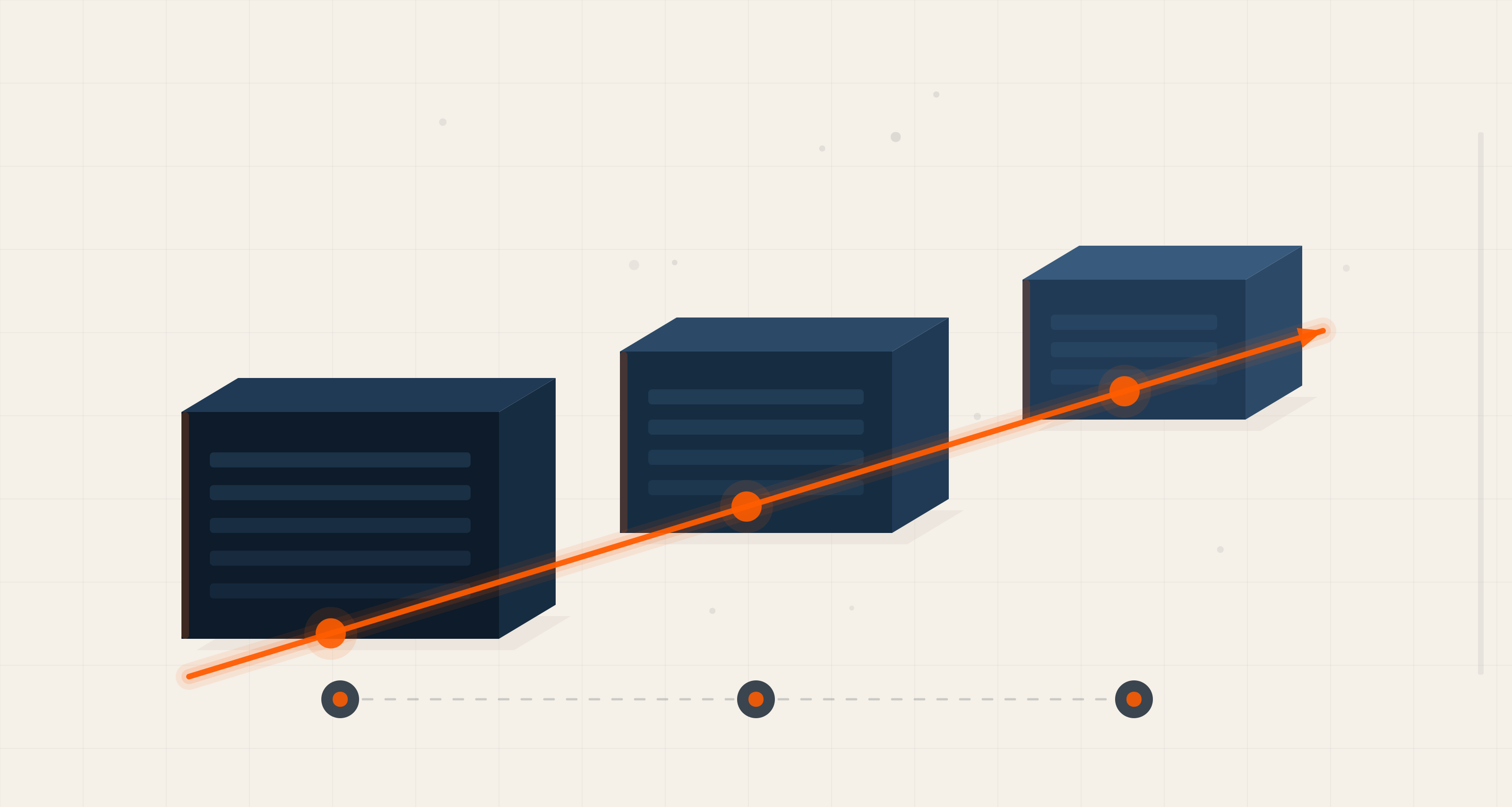
The Sequencing Framework: Sales Cloud → CDP (Parallel) → Marketing Cloud
Here is the sequence we recommended, and the reasoning behind each step.
Step 1: Sales Cloud First — Fix the Foundation
You cannot activate what you haven't cleaned.
The client's Sales Cloud was technically present but practically underused. Salesforce was being used to track store lifecycles but wasn't integrated into anything that mattered — not marketing triggers, not renewal workflows, not partner health scoring. Lead routing was manual. Forecasting was done in spreadsheets. There was no closed-loop attribution between marketing campaigns and sales outcomes.
Before any engagement layer can function intelligently, the core CRM data model must be:
- Standardized: core objects (Leads, Contacts, Accounts, Opportunities, Campaigns) defined and consistently used
- Clean: duplicates resolved, required fields populated, field naming normalized
- Integrated: connected to the systems that feed it (forms, LMS, commerce, membership data)
- Trusted: teams actually using it as a system of record, not a backup for what lives in email
Marketing Cloud is only as intelligent as the CRM data it draws from. If contacts are duplicated, lifecycle stages are empty, or campaign members are not being tracked, the journeys you build in Journey Builder will fire on incomplete information — or worse, not fire at all.
Fixing Sales Cloud first is not a delay. It is the prerequisite.
Step 2: CDP (Data Cloud) in Parallel — Build the Unified Identity Layer
While Sales Cloud remediation is underway, CDP setup can begin in parallel — but it must begin correctly.
The core job of a CDP at this stage is not activation. It is identity resolution. The client had a classic multi-system identity problem: the same diver might appear as a website visitor, a CRM contact, a learner in the LMS, a club member, and a travel booking customer — all with different IDs and no linking logic. Manual deduplication was impractical at scale across 180 countries.
Data Cloud starts by ingesting from available source systems — CRM, Marketing Cloud, Snowflake exports, LMS, commerce — and resolving identities using deterministic rules (email, CRM Contact ID) and probabilistic matching (name + phone + membership ID). The result is a unified 360° profile per diver.
This work runs in parallel with Sales Cloud cleanup for a structural reason: Data Cloud and Snowflake require clean CRM data as an input, not a byproduct. If CDP ingests from a dirty CRM, it will unify dirty records. So while you can build the architecture, configure data objects, and define identity rules while CRM is being remediated, the full activation layer of CDP only becomes reliable once the CRM layer underneath it is trustworthy.
This is why the Snowflake data warehouse implementation (which the client's data infrastructure partner was handling) was explicitly called out as a prerequisite for full CDP activation. You don't want to build calculated insights — CLV, RFM scores, engagement indices — on top of incomplete or fragmented source data.
Step 3: Marketing Cloud Last — Orchestrate What You've Unified
Marketing Cloud is the activation engine. But an activation engine without a clean data model and unified identity is just a mass-email system with extra steps.
Once Sales Cloud is remediated and CDP has unified profiles with real behavioral signals, Marketing Cloud transforms:
- Static segments become dynamic audiences: instead of uploading a CSV of "lapsed members," you pull a real-time Data Cloud segment of "divers with >180 days no activity, active email, Club membership expiring in 30 days"
- Journeys become triggered, not scheduled: instead of a monthly newsletter batch, a journey fires when a diver completes a certification — pulling real data from the LMS via CDP into the entry event
- Attribution closes the loop: campaign engagement from Marketing Cloud feeds back into CRM contact records and Data Cloud engagement indices, so you can actually measure which journeys drive renewals
The client's existing Marketing Cloud had approximately 35 B2C journeys across categories like post-certification nurture, club member onboarding, abandoned course, travel post-booking, and seasonal campaigns. Many of these weren't functioning at full capacity because the data feeding them — CRM sync, behavioral triggers, consent attributes — was inconsistent. The right architecture fixes that at the foundation, not the surface.
What Breaks When You Get the Sequence Wrong
It's worth being direct about what happens when organizations skip this order.
Marketing Cloud first, CRM later: You end up building journeys on contact records that haven't been cleaned, validated, or connected to actual business outcomes. Segments are static. Attribution is guesswork. When someone says "our email ROI is low," the real problem is usually that Marketing Cloud is firing on bad data.
CDP before CRM remediation: You resolve identities, but you're unifying incomplete records. Calculated insights like CLV or churn risk will be wrong because the behavioral signals feeding them (purchase history, course progress, renewal status) aren't reliably making it into the CRM in the first place.
All three simultaneously without sequencing logic: You create three workstreams that are all waiting on each other. Marketing Cloud needs clean CRM data. CDP needs clean CRM data and Snowflake. Snowflake needs source system alignment. None of these are wrong to pursue in parallel — but they need explicit dependency mapping, not just parallel project tracks.
A Note on the Reality of Discovery
The sequencing above is our recommended starting point — not a fixed law.
We were clear with the client's team about this. The ideal flow — Sales Cloud first, CDP in parallel, Marketing Cloud after — represents the architecturally sound default. But it has to be pressure-tested during discovery, because:
"Some Marketing Cloud capabilities might need immediate attention. Sales Cloud will likely be deprioritized if it's not actively used today. The realistic volume of work for each stream will only emerge from proper assessment and discovery — which drives the actual sprint count needed for each."
This is honest delivery. Sequencing logic gives you a starting position. Discovery gives you the actual plan.
For this client specifically, one factor that complicated the default sequence was the interplay with Zendesk: mid-scoping, the client raised the possibility of replacing Zendesk with Salesforce Service Cloud as well, which would affect the activation layer timeline. That kind of scope evolution is normal — and it's exactly why a sequencing framework, rather than a fixed waterfall plan, is the right tool.
The Broader Principle: Data Integrity Before Activation
Across all the discovery sessions, one theme repeated itself: The client's challenges weren't primarily tool limitations. They were data integrity problems masquerading as tooling problems.
Poor segmentation wasn't because Marketing Cloud lacked capabilities. It was because the behavioral data feeding segmentation wasn't unified. Weak CRM adoption wasn't because Sales Cloud was the wrong choice. It was because the object model hadn't been standardized and the team had no reason to trust the data they were entering.
This is the principle that drives the sequencing recommendation:
You cannot activate what you haven't unified. You cannot unify what you haven't cleaned. Start at the foundation — every time.
The Salesforce multi-cloud stack is powerful. Sales Cloud, Data Cloud, and Marketing Cloud working together can drive real-time personalization, closed-loop attribution, and lifecycle-based journey orchestration at global scale. But that power is conditional on the integrity of the data layer underneath it.
Get the sequence right, and each layer amplifies the next. Get it wrong, and you're building automation on top of ambiguity — and wondering why the results don't match the promise.
Axelerant works with global enterprises on Salesforce strategy, discovery, and multi-cloud implementation. If you're navigating a similar transformation — or trying to sequence a multi-cloud engagement — we'd be glad to share how we think through it.
Bring this dispatch into a working session - one page in, scoping memo out.
Brief Foyer