
Introduction
The question came up early in the engagement. A global endurance sports organization already runs HubSpot for marketing automation, their race email program, CRM, and campaign infrastructure all live there.
The question was whether CMS Enterprise could also handle their web properties: a sprawling portfolio of race-specific sites, regional hubs, and brand properties that collectively represent dozens of distinct web presences, managed by distributed teams across multiple geographies.
It's exactly the kind of question that gets oversimplified in both directions. Either "HubSpot can do it" or "HubSpot isn't built for this." We ran a proper discovery to find out which parts of that were actually true.
The Four Questions We Evaluated
Any serious CMS evaluation for a multi-property, distributed organization comes down to four things:
- How does it handle content partitioning?
- Can it sustain a shared design system at scale?
- How does it support multilingual and localized content?
- How does it manage permissions for teams that shouldn't have access to each other's properties?
These aren't abstract architecture questions.
For an organization running 160-plus events annually across multiple race series and regional markets, each of these affects real operational decisions, who can touch what, how brand consistency gets enforced, and how much overhead the web team carries per event.
Content Partitioning: Genuinely Strong
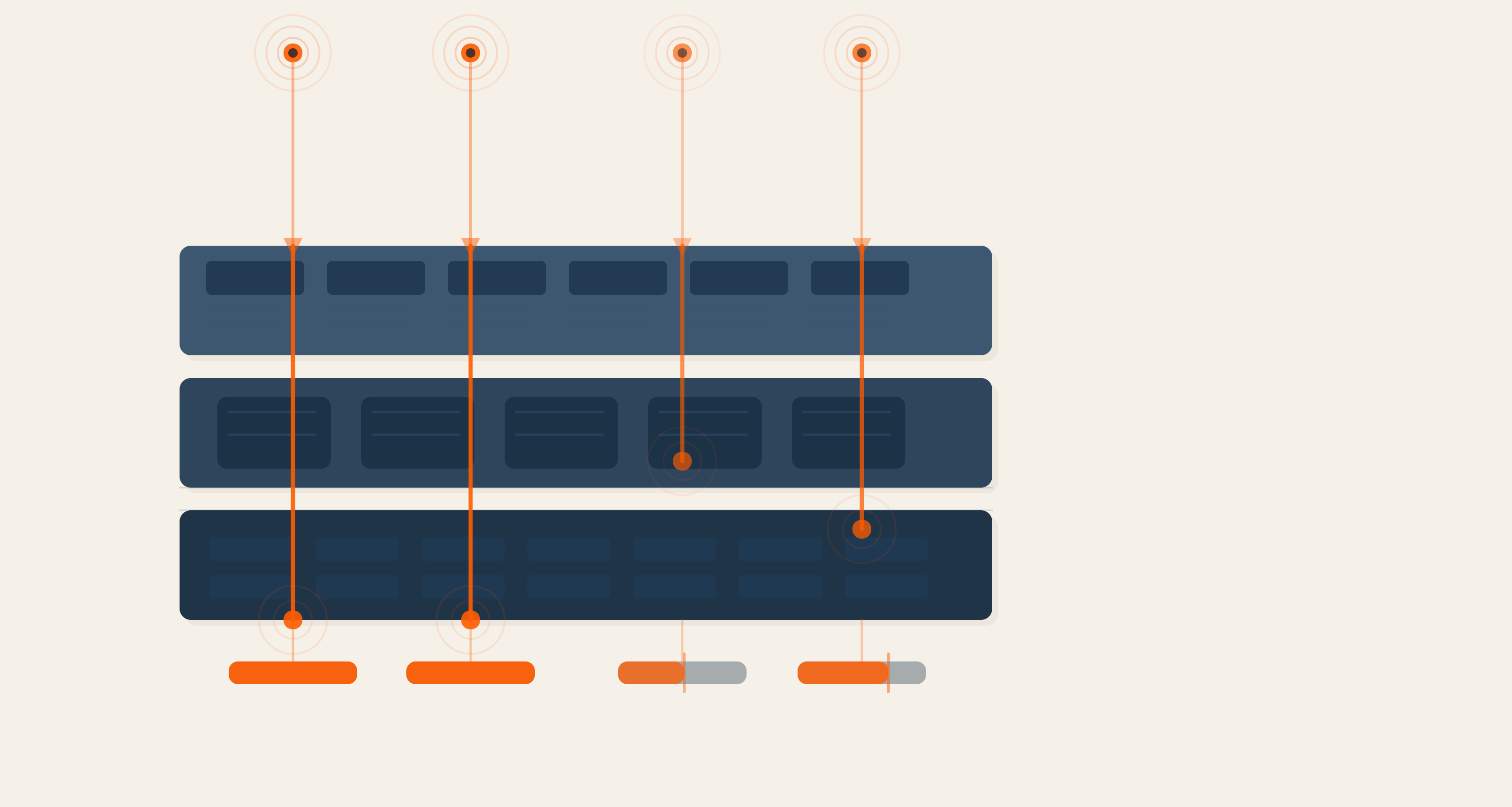
HubSpot CMS Enterprise's partitioning model is one of its more mature capabilities. Business unitscan be segmented at the portal level, with content, pages, templates, and files scoped to specific teams or brands.
For an events organization, this means race series teams can operate within their own partition without inadvertent access to or interference with other series.
The architecture translates cleanly to a multi-brand events context. Each race series gets its own partitioned workspace.
Shared assets, imagery, form modules, global headers, live in a common library accessible to all partitions. The governance model is sound, and it holds up under the kind of scale this organization operates at.
Shared Design System: Enterprise-Grade
This is where CMS Enterprise earns its tier. The module and theme system supports shared component libraries that can be maintained centrally and inherited by all child sites.
Design updates propagate systematically rather than requiring per-site manual updates.
For a brand with strict visual standards across every event property, this is a meaningful operational advantage.
HubDB adds another layer of flexibility here. Dynamic content, race schedules, venue information, and athlete category data can be centrally authored and surfaced across multiple site properties through template logic.
For an events organization where the same data type (race details) appears across hundreds of event pages, HubDB-driven templates are significantly more maintainable than static page authoring at scale.
Localization: Functional, Not Best-In-Class
This is where we gave the most qualified answer. HubSpot CMS Enterprise supports multilingual content through its content staging and language-variant system. For an organization with audiences across North America, Europe, and Asia-Pacific, this matters.
The capability works. Language variants can be created for individual pages while maintaining canonical relationships. The limitation is that HubSpot's localization infrastructure is not purpose-built for organizations with deeply complex multilingual requirements; it doesn't match the depth of platforms like Contentful or dedicated headless CMS architectures when localization is a primary concern.
For this client, the localization requirements are real but not at a level that would make HubSpot's approach a disqualifying constraint. The system can handle the volume.
The question is whether the operational workflow for managing language variants fits the team's capacity. That's a process design question as much as a platform one, and it's something the implementation phase will need to address directly.
Permission Hierarchies: Manageable With Intentional Architecture
Distributed teams need granular permission controls:
- Who can publish to the global brand site?
- Who is limited to their regional race series?
- Who can modify templates versus only editing page content?
HubSpot CMS Enterprise's permission system is adequate for most scenarios, but complex hierarchies require deliberate architecture. Out of the box, the roles model doesn't always map cleanly to the kind of nested, brand-within-brand-within-region structurea global events portfolio creates. The workarounds exist, and they work, but they need to be designed, not assumed.
This isn't a dealbreaker. It's a scoping consideration. Permission architecture needs to be part of the discovery-to-implementation handoff, not something addressed after the site structure is built.
The Verdict From Discovery
HubSpot CMS Enterprise is a serious candidate for this organization. The partitioning model and shared design system capabilities are strong enough to support the portfolio at scale. The HubDB layer makes the event-data-driven page architecture viable.
The platform's native integration with their existing HubSpot marketing automation stack is a real advantage, not a marketing claim, but a practical reduction in integration overhead.
The localization story requires realism. HubSpot can handle it, but the organization shouldn't expect the multilingual workflow to be effortless. It needs investment in process design.
The permission architecture needs to be planned before anything is built, not retrofitted.
The discovery engagement is complete. The implementation decision is pending. What we can say is that the concerns that would typically disqualify HubSpot CMS Enterprise for a portfolio of this scale: partitioning, design system consistency, and HubDB-driven dynamic content, are not the actual constraints here. The real constraints are the ones that require thoughtful configuration, not platform substitution.
If you're evaluating HubSpot CMS Enterprise for a multi-property or multi-brand web presence, we're glad to walk through the architecture with you.
Bring this dispatch into a working session - one page in, scoping memo out.
Brief Foyer