Introduction
The structured data gap that is quietly removing your brand from the fastest-growing discovery channel.
Something happened in the last eighteen months that most digital teams have not fully accounted for. A meaningful and growing portion of the people who might find your brand are no longer starting their research with a search engine. They are starting with an AI tool.
They are asking ChatGPT, Perplexity, or Gemini a specific question: how to do something, where to find something, or what the best option is for a particular situation. And they are acting on the answer. If your brand does not appear in that answer, you are not in the consideration set. Not because you were outranked, but because you were not readable.
This is the structured data gap, and it is growing faster than most organizations are moving to close it.
What We Found On A Recent Program
During a discovery phase for a global consumer brand, we ran a technical SEO audit alongside qualitative user research. One finding stopped us: a meaningful proportion of interviewees described using AI tools to plan their purchases, trips, and decisions in this category. Not as a future behavior but a current one. They were building full decision frameworks inside AI tools before visiting any brand's website.
The brand had strong domain authority, a large content library, and consistent SEO performance. By traditional metrics, they were well-positioned. But when we looked at their structured data coverage, the schema markup that makes content machine-readable by AI systems and modern search engines, the gaps were significant:
- The FAQ schema was inconsistent
- The product and course schema were minimal
- Location data for their distribution network was not structured at all
The brand ranked well for branded queries. But for the intent-based questions that users were asking AI tools, "how do I start doing X," "what is the best way to learn Y," "where can I find Z near me," they were often absent from the synthesized answers those tools produced.
What AI-Readable Content Actually Requires
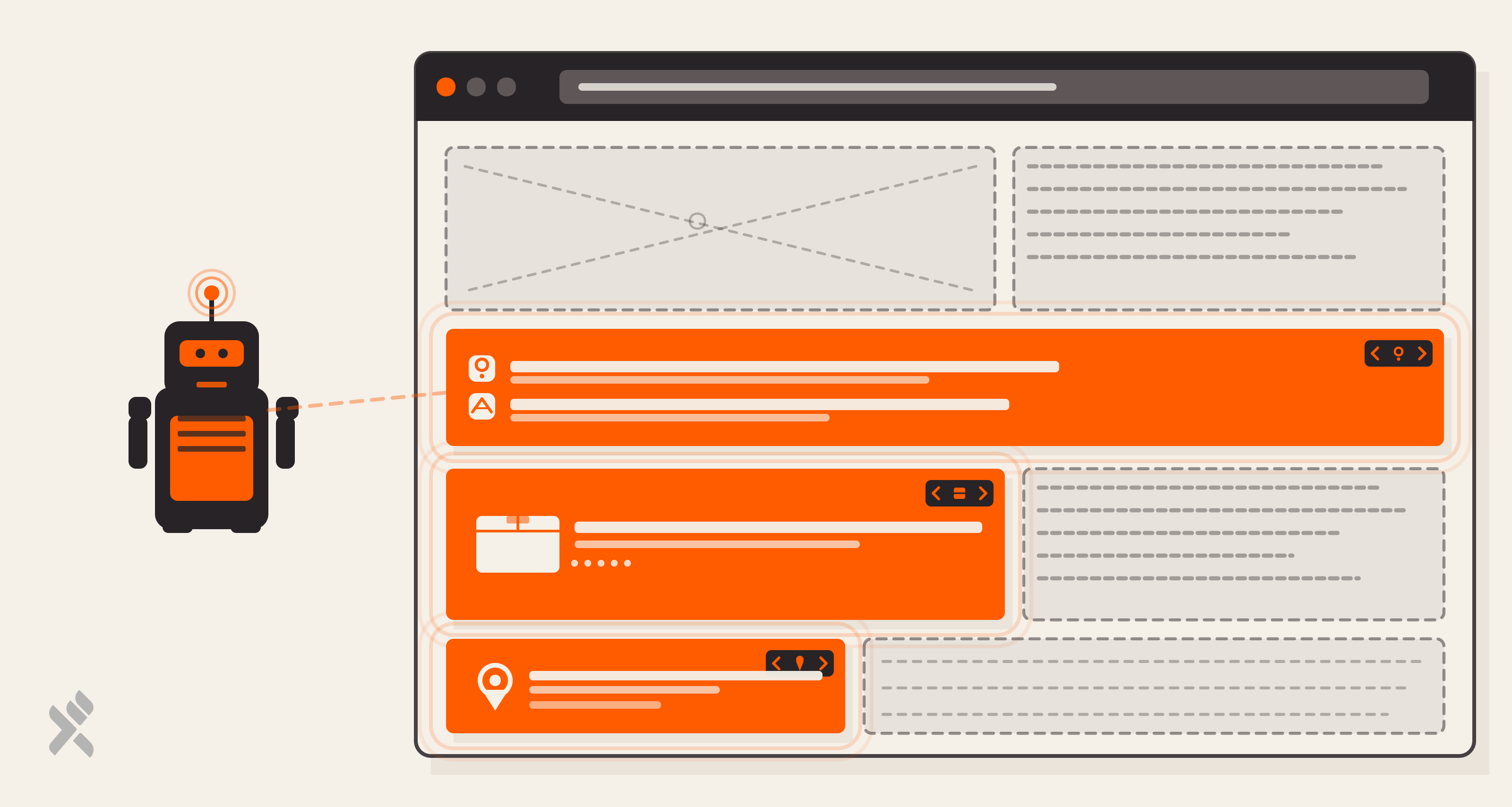
AI assistants do not crawl and rank the way traditional search engines do. They synthesize from sources they can parse, and parsability depends on structure. A page with rich content in beautifully designed components may be excellent for a human reader and largely opaque to an AI system that cannot interpret visual hierarchy, layout logic, or implied meaning.
What makes content AI-readable is schema markup, specifically the structured data vocabulary that tells machines what a piece of content is, what it is about, and how it relates to other entities. The most immediately valuable schemas for most organizations are FAQ (which directly feeds AI
answer synthesis), Product or Course or Service (which feeds product discovery queries), and LocalBusiness or Organization (which feeds location and entity queries). If you are curious, we did a specific study on how universities can stay visible in AI-first search.
Beyond schema, answer engine optimization means structuring the content itself to answer specific questions directly and concisely. A page that buries the answer to "how long does this take" in the fourth paragraph of a course description is a page an AI tool cannot confidently synthesize from. A page with a clearly marked FAQ block that answers the question directly is a page that becomes part of an AI tool's answer.
The Window Is Still Open
The encouraging thing about this gap is that it is still closable for most organizations. AI-native discovery is growing but not yet saturated. The brands that establish structured data presence now, while their competitors are still treating this as a future consideration, will have a meaningful head start in the channel that is growing fastest.
The implementation is not a platform rebuild. For most organizations, it is a content engineering project that can run in parallel with other digital work. Schema markup is added to existing pages. FAQ sections are structured more deliberately. Location and entity data are organized into machine-readable form.
The decision that matters is whether to treat AEO as part of the current platform work or defer it to a future phase. Every month of deferral is a month of AI-driven queries where your brand does not appear, and first-mover advantages in new discovery channels tend to compound rather than equalize over time.
Where To Start
An AEO audit, mapping the intent-based queries your audience is most likely to ask an AI tool against the current structured data coverage of your site, is the fastest way to identify the highest-priority gaps. In most cases, a handful of high-traffic content types, course or product pages, FAQs, and location pages, represent the majority of the opportunity. Additionally, you can also conduct an AI-first CRO Audit to understand how discovery, engagement, and conversion occur across your digital ecosystem.
Starting there, rather than attempting a site-wide structured data implementation, is both faster and more likely to produce measurable results quickly, which builds the case for broader investment in AI-native discoverability across the rest of the estate.
- How Do You Appear In ChatGPT Results?
- What Is Answer Engine Optimization?
- How Do You Get Cited By Perplexity?
- What Is llms.txt?
- Does Schema Affect AI Search?
If you want to understand where your structured data gaps are and how to close them, talk to our team.
Bring this dispatch into a working session - one page in, scoping memo out.
Brief Foyer