
Introduction
The sequencing decision determines whether features get stuck in sprint 3 or are delivered on time.
There is a specific failure mode in complex digital programs that we have seen often enough to give it a name. We call it the sprint 3 problem. Sprint 1 goes well. Sprint 2 goes reasonably well. Then sprint 3 arrives, and something that was scoped, estimated, and confidently committed to turns out to be blocked.
The blocking reason is almost always the same: a dependency that was not discovered until the feature was being built:
- An API that is not ready
- A data model that does not support the required schema
- An integration that requires a business decision that has not been made
- A third-party system whose contract is not yet confirmed
The frustrating thing about these blockers is that none of them were unknown. They just were not discovered until the team was mid-sprint and the clock was running.
Why Sequential Discovery Causes This
The traditional discovery model runs sequentially: content audit and IA, then workshops, then feature prioritization, then technical architecture, then sprint planning. Each phase completes before the next begins. It is logical, structured, and easy to report on.
The problem is the dependency between the phases. Feature prioritization happens before technical architecture, which means features are estimated and committed to before anyone has confirmed whether the integrations those features depend on are ready to build against. The sprint 3 problem is not bad engineering but a structural consequence of integrating discovery after feature commitment.
The Three-Track Model
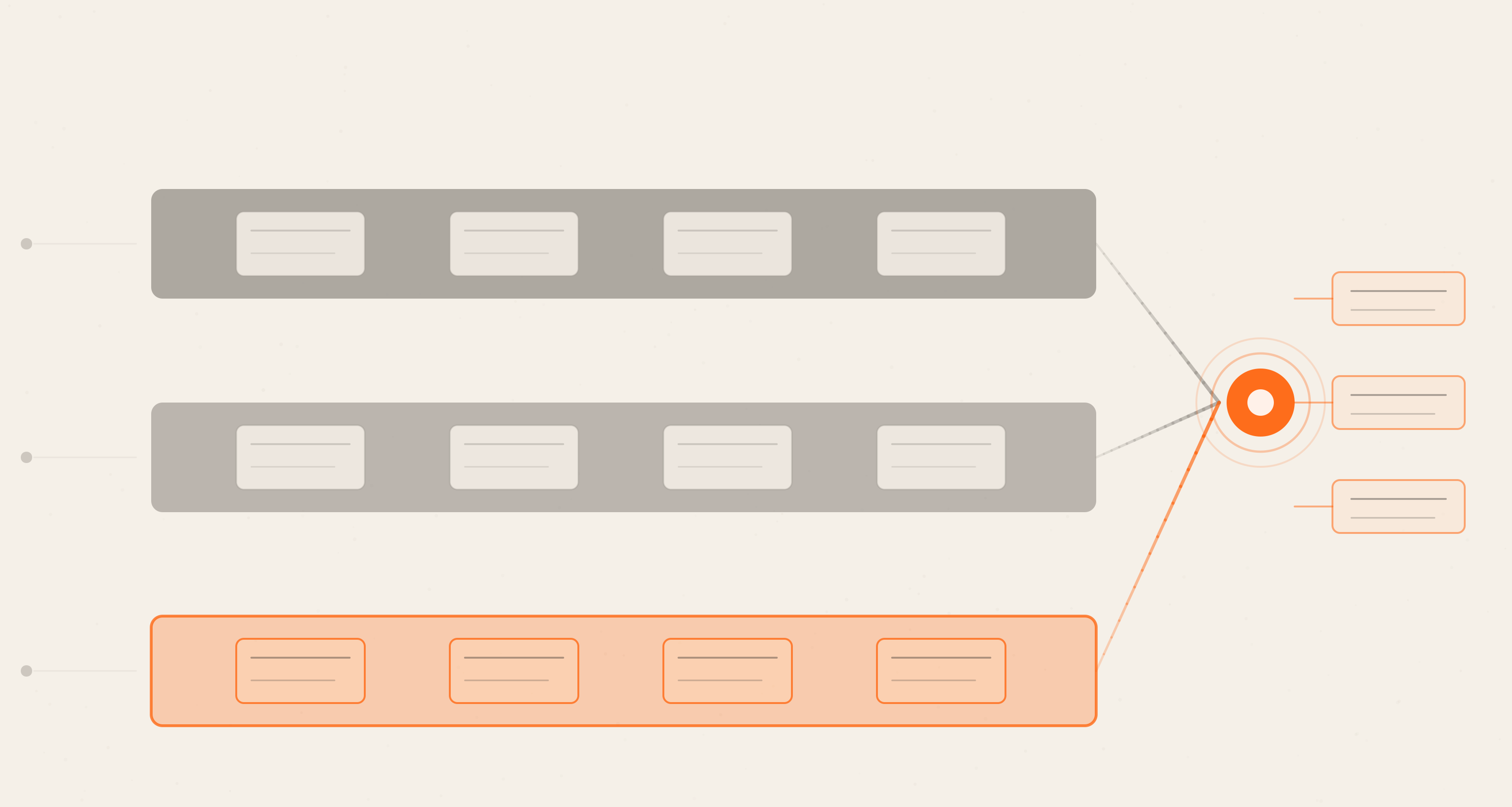
On a recent program involving a complex multi-platform estate, several web properties, a mobile application, and integrations across CRM, commerce, LMS, billing, and identity management systems, we structured discovery across three parallel tracks rather than one sequential one.
- Track 1 Is Content And Navigation Architecture:The experience-facing track. Content audit, user intent mapping, navigation taxonomy, and co-design workshops with stakeholders. This is the track that produces the site map, the navigation framework, and the content taxonomy. It runs exactly as a traditional discovery track does.
- Track 2 Is Feature Breakdown By Domain:This being the product-facing track, it takes the research synthesis and translates it into user stories, acceptance criteria, and a feature backlog grouped by capability domain rather than by technical system. This track produces the sprint-ready backlog, with dependency flags already marked against each story.
- Track 3 Is Integration And API Readiness:This is the technical-facing track that runs in parallel with both others. It assesses each integration in the estate, identity layer, CRM, commerce platform, LMS, billing system, and third-party tools for readiness. It is not restricted to "does this integration exist," but "is it ready to build features against this sprint cycle?"
- The Three Tracks Converge At A Single Point: the feature prioritization workshop. At that moment, the team does not just have a backlog of features. It has a backlog with integration readiness information already mapped to each feature. The features that can go into Sprint 1 are the ones whose integration dependencies are confirmed ready. Features whose dependencies are not ready get a clear blocking condition and a named owner, not an optimistic estimate.
What The API Readiness Register Actually Reveals
On the program described above, running Track 3 in parallel revealed three categories of integration issues that the sequential model would have surfaced mid-sprint.
- First, an integration assumed to be stable had experienced a recent disruption that was actively affecting operators in the ecosystem daily. The sequential model would have scoped features against this integration and discovered the disruption when someone tried to build against it. Running Track 3 in parallel meant the disruption was discovered in Sprint 0 and treated as the emergency it was, before a single line of feature code was committed.
- Second, several integrations were "in place" but with significant data quality issues. The CRM had identity deduplication problems. The LMS had limited external API exposure. These were not blockers to all features, but they were blockers to specific features that relied on clean, real-time data. Knowing this before estimation meant those features were scoped with realistic dependency conditions rather than optimistic ones.
- Third, some integrations required business decisions, not engineering decisions, before any building could start. Consent models that needed legal alignment. Commission models that needed commercial alignment. These went into a named decision register with owners and trigger conditions, rather than silently becoming sprint blockers three months later.
What Does This Change For Clients
The three-track model changes the character of the feature prioritization conversation. Instead of a workshop where features are estimated and sequenced without integration context, it becomes a workshop where the team can say, with evidence, which features can start in Sprint 1 because their dependencies are confirmed ready, which features are blocked by named issues with resolution timelines, and which features depend on business decisions that need to happen before engineering begins.
That is a different quality of planning conversation, and a different quality of client confidence in the roadmap, because the roadmap reflects what is actually known rather than what is optimistically assumed.
The sprint 3 problem does not fully go away. Programs of sufficient complexity will always surface surprises. But the difference between a surprise that was discoverable before sprint planning and one that was not is the difference between a managed risk and an unmanaged one. The three-track model is primarily a tool for converting the first category into the second.
If your programs are hitting dependency blockers mid-sprint, let's talk about how to structure discovery differently.
Bring this dispatch into a working session - one page in, scoping memo out.
Brief Foyer