
 We respect your privacy. Your information is safe.
Introduction
A practitioner's blueprint for enterprise website consolidation, covering tier classification, dual-stream delivery, LLM orchestration as a migration POC, and the governance model that makes it stick.
Most consolidation programs fail not because of technical complexity. They fail because there is no shared decision logic.
A platform migration without a classification framework is organized chaos at scale. You move sites. You hit unexpected complexity. The estimate blows out. Stakeholders disengage. The program scope contracts again and again until what remains is a fraction of what was intended, and the estate that caused the problem in the first place is still mostly intact.
The first ninety days of any consolidation program should be oriented around one deliverable above all others: a classification framework that every stakeholder agrees on before a single line of code moves. Everything else: architecture decisions, effort estimates, platform configuration, and governance design follow from that framework. Skip it, and the rest of the program inherits the ambiguity.
The Decision Framework: Four Layers Before A Single Site Moves
The instinct is to start with the platform. Evaluate options, select the target architecture, and begin configuring. It feels like momentum. It is not.
The platform decision is downstream of the classification decision. You cannot design a multisite architecture until you know which sites are consolidating into shared domains and which are retaining their own. You cannot write a migration playbook until you know what tier a site belongs to. You cannot credibly price the program until the estate has been evaluated through a consistent lens agreed upon by all stakeholders.
The decision framework we use is not a single scoring exercise. It is four sequential layers, each answering a different question and constraining the decisions that follow. Working through all four before touching the platform is not process overhead. It is the work that makes the rest of the program possible.
|
LAYER 0 The Gate Question
“Does this site serve a current and defensible business purpose?”
This is the root of the entire framework. Before a site enters the classification process, it must pass a binary test: Is there a clear, living business reason for this property to exist? Not a historical reason. Not a reason that made sense three years ago when a regional team spun it up. A current one.
Sites that fail this gate do not get tiered. They go directly to retirement. In most large estates, a meaningful portion of the active inventory fails here, properties that carry live domains, active SSL certificates, and hosting costs, but serve no discernible user or business function. Identifying these early is the fastest way to recover costs in the entire program and requires no migration work whatsoever. OUTPUT: Retirement candidates removed from scope immediately. Remaining estate proceeds to Layer 1. |
↓
|
LAYER 1 The Five-Pillar Scoring Matrix
“What strategic and operational role does this site play?”
The five classification inputs are not a checklist to be reviewed and set aside. They are a weighted scoring instrument — and the weighting is deliberate. Not all inputs carry equal strategic significance, and conflating them produces the wrong classifications.
Business impact, traffic and engagement signals are the primary signals. They carry the most weight because they reflect actual value, what the site contributes to revenue, market presence, or regulatory compliance, and whether users are actually engaging with it. A site scoring high on both warrants investment. A site scoring low on both is a retirement or consolidation candidate regardless of its complexity.
Technical complexity is an effort signal, not a strategic one. A site with complex integrations does not automatically belong in the highest tier; it belongs in the tier its strategic role warrants, with complexity informing the migration approach and effort model, not the classification outcome itself.
Duplication index asks how many variants of this brand or content exist across the estate and which instance is canonical. Where duplication is high, consolidation is the default recommendation. Where a site is the authoritative instance of a brand or regulatory requirement, it warrants protection.
Compliance posture captures accessibility obligations, regulatory requirements, and any legal constraints that apply to the property. This input can override the strategic score in regulated sectors. A low-traffic regulatory compliance page may score poorly on business impact, but cannot be retired without a legal assessment. OUTPUT: A composite classification score per site. Scores map directly to Tier 1, Tier 2, or Tier 3, with borderline sites flagged for stakeholder review rather than automatically assigned. |
↓
|
LAYER 2 The Domain Strategy Branch
“Does this site need its own domain, or can it live within a parent?”
This layer runs in parallel with tier classification and addresses an architectural question that the scoring matrix does not. Two sites can score identically on the five pillars and arrive at entirely different domain outcomes depending on brand strategy, SEO considerations, and the regional or regulatory context of the market they operate in.
The domain strategy decision has a direct and significant impact on program cost. Every retained standalone domain carries hosting overhead, SSL certificate management, DNS configuration, and ongoing maintenance. Every domain that consolidates under a parent gains a shared infrastructure model, unified SSL management, improved SEO authority under a single canonical domain, and dramatically reduced operational overhead. The goal is not to collapse every domain; it is to make this decision deliberately, with the cost implications visible to the stakeholders authorizing it.
OUTPUT: Domain retention or consolidation decision per site. This output feeds directly into the platform architecture design; the multisite structure cannot be designed until this layer is resolved. |
↓
|
LAYER 3 The Multilingual Branch
“How does this site handle regional and language variation?”
This layer is named explicitly because it is the one most frequently assumed away in consolidation planning and the one that, when left unresolved, causes the most significant rework mid-program. Multilingual and multi-regional site structures are not a technical configuration choice. They are a business and legal decision that the framework needs to surface and resolve before architecture work begins.
The central question is whether a regional variant collapses into a language path within a single canonical domain or retains its own domain identity. Both are architecturally valid outcomes. The decision turns on a combination of factors: the degree of content differentiation between language variants, the local SEO strategy for each market, the legal requirements of each jurisdiction, and the operational capacity of the team responsible for managing localized content going forward.
What the framework does not do is make this decision on behalf of the organization. The technical team can model the implications of each path: unified multisite with language routing versus federated regional domains with a shared codebase. The business, legal, and brand stakeholders have to sign off on the direction. Committing to a multisite architecture before that sign-off has happened is one of the most reliably expensive mistakes a consolidation program can make. OUTPUT: Language collapse vs domain retention decision per brand-region combination. A documented decision log, not a technical assumption, that is signed off by business and legal stakeholders before architecture is finalized. |
FRAMEWORK OUTPUT: FOUR SEQUENCING BUCKETS
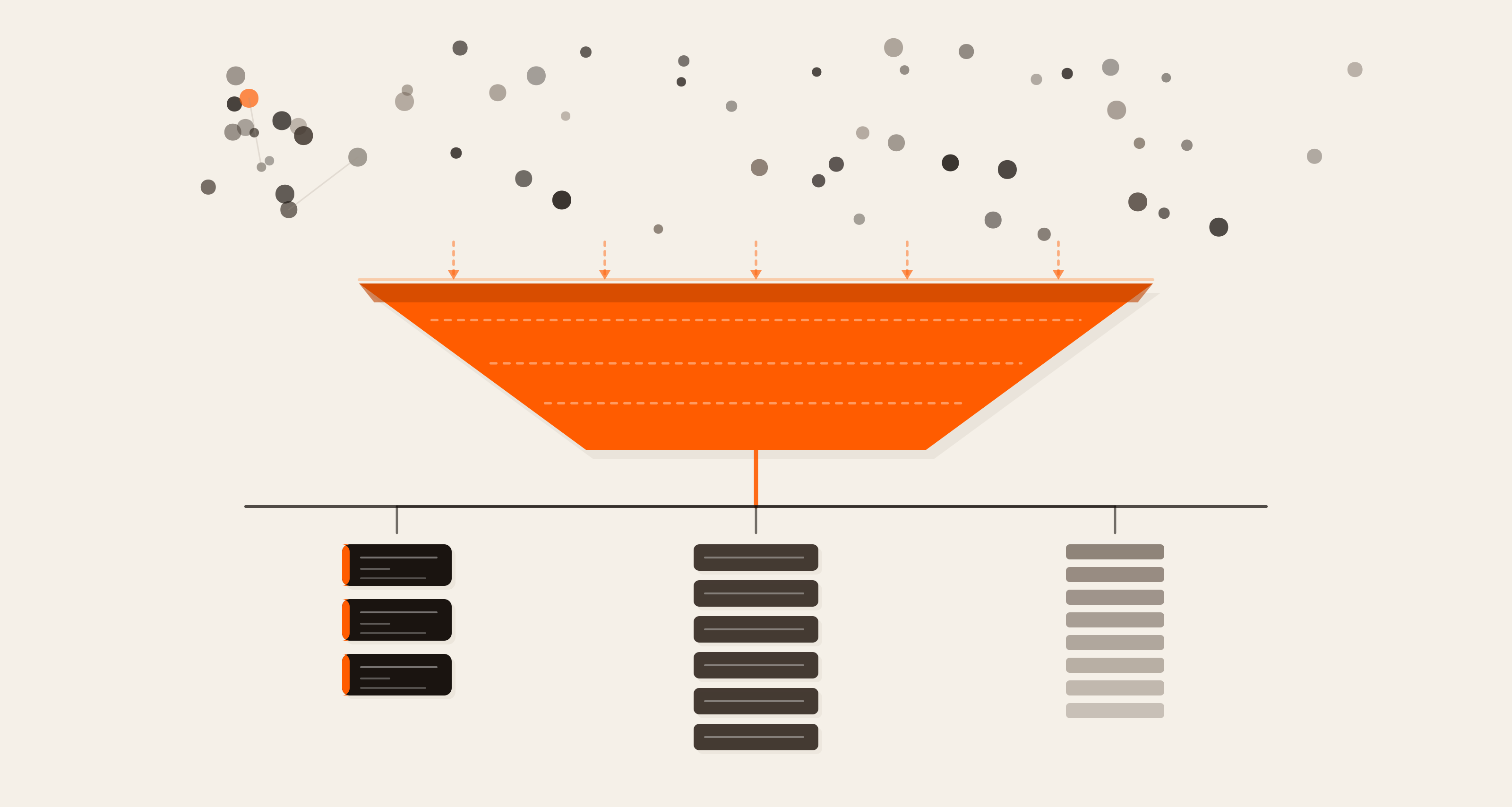
The four layers produce a classification and a set of architectural decisions. Those outputs map directly to four sequencing buckets, and the order of those buckets is not arbitrary. It is the delivery sequence that maximizes early momentum, manages stakeholder risk, and builds the migration pattern before applying it at volume.
|
FIRST
Quick Wins
Sites already on the target platform that need governance wrapping, not migration. These go first because they establish the managed model with no migration risk and demonstrate immediate progress to stakeholders who are watching closely. |
PARALLEL
Retirement & Deprecation
Sites that failed the gate question or scored below the consolidation threshold. Actioned immediately and in parallel, no migration work, immediate cost recovery from hosting, and SSL elimination, and a visible reduction in estate size from week one. |
|
SECOND
Consolidation Candidates
Tier 2 sites routed into parent domains or shared multisite architecture. Sequenced after Quick Wins and the first wave of retirements. LLM orchestration applies here at scale, working against the archetype templates established in the Quick Win phase. |
THIRD
Tier 1 Migration
Full-feature flagship sites with integration complexity. These are sequenced last, not because they are least important, but because they carry the highest delivery risk and benefit most from a team that has already established its migration pattern on lower-complexity sites. |
The Three-Tier Classification Model
The classification framework produces one of three-tier assignments for every site that passes the gate question. Each tier has a distinct strategic profile, investment rationale, and migration approach. Critically, each tier also carries a defined promotion path; the classification is not permanent. It reflects the site's current role, not a ceiling on what it can become.
|
TIER 1
Full-Feature Flagship CRM integrations, transactional capability, store locators, high-traffic brand identities. Full migration investment with dedicated architecture planning, integration mapping, and phased UAT gates.
Benefits: Scalable API-first model. Shared integration architecture reduces long-term custom cost. Standardized accessibility compliance from go-live. |
TIER 2
Brand & SEO Presence Regional awareness, regulatory compliance, and market-specific brand sites without transactional layers. Primary target for multisite consolidation and LLM-assisted migration at scale using shared archetype templates.
Benefits: Standardized templates and patterns. Controlled content governance. SEO maintained. Defined promotion path to Tier 1 when a market grows to warrant full-feature investment. |
TIER 3
Long-Tail & Dormant Superseded brand variants, archived regulatory pages, and regional presences with negligible engagement. Absorbed under a parent domain as redirected paths or retired entirely. No migration investment.
Benefits: Immediate hosting and SSL elimination. Domain portfolio reduced. No ongoing maintenance hours. Eliminates unmanaged technical and compliance debt at the edge of the estate. |
Classification is per site, not per brand. The same brand can hold a Tier 1 flagship in its primary market and a Tier 3 dormant property in a market it effectively exited years ago. Treating the brand as the unit of analysis is one of the most reliable ways to inflate the program scope and miss the retirement opportunity.

THE UPGRADE PATH: WHY TIER 2 IS NOT A PERMANENT DESTINATION
One of the most useful properties of a tiered classification model is that it encodes a trajectory, not just a state. A site classified as Tier 2 today is not locked in that tier. When a regional market grows, when a brand line gains investment, when a product category moves from awareness to transactional, the promotion criteria for Tier 1 are already defined. The site does not require a re-architecture project. It requires a controlled scope expansion within an architecture designed to accommodate it.
This matters commercially and politically. Regional teams that are being asked to accept consolidation into a shared Tier 2 template are far more likely to engage constructively when the conversation includes a clear, criteria-based path to full-feature investment if and when the market justifies it. The governance model does not just prevent sprawl; it creates a legitimate channel for growth.
Two Streams, Not One Program
This is the structural decision that most organizations get wrong, and it is worth being direct about it. Consolidation and stabilization are not the same work. Treating them as a single program, with shared timelines, shared resource pools, and shared stakeholder expectations, creates noise in both directions.
The consolidation work is slowed by the urgency of support issues. The stabilization work is deprioritized because consolidation milestones dominate the conversation. Both suffer.
|
STREAM A: RUNS FROM DAY ONE
CDM Stabilization & Visibility
|
STREAM B: PARALLEL CADENCE
Consolidation Execution
|
Running these as named, separate workstreams with distinct status reporting and distinct commercial treatment is not an administrative preference. It is the structural condition that makes both workstreams deliverable on a realistic timeline.
LLM Orchestration As A Migration POC: Calibrate Before You Commit
There is a temptation, when facing a consolidation program of this scale, to reach for automation as the answer to the cost problem. Build a script, run it across the estate, move on. We have seen this approach before. It produces inconsistent outputs, unmappable components, and a content quality problem that engineers spend the next six months cleaning up.
LLM orchestration is not that. And the distinction matters more than it might initially seem.
What we are describing is not a batch process that runs overnight and delivers a finished migration. It is a structured proof of concept, run against a defined set of site archetypes early in the program, that tells you, with accuracy, what each migration will actually cost before you commit engineering resources to it. That is a fundamentally different value proposition. It turns an estimate into a calibrated model.
WHAT THE ORCHESTRATION ACTUALLY DOES
The starting point is the live site or the design system; in most enterprise estates, both exist. Point the agent at a URL, and it interrogates the page structure, maps components to their likely CMS field equivalents, extracts content hierarchy, and identifies integration dependencies. Point it at a Figma design system, and it pulls spacing values, typography tokens, color variables, and component relationships directly via the design system's API layer.
What comes out the other side is not a finished site. It is a structural scaffold, roughly 55 to 65 percent of the way there, depending on the complexity of the source CMS and the consistency with which the design system has been applied. The remaining 35 to 45 percent is deliberate. That gap is where editorial judgment, integration wiring, and content governance decisions live. No orchestration layer should make those calls autonomously, and any approach that claims otherwise misrepresents what the technology can do right now.
What matters is that the scaffold is reproducible, documented, and consistent across sites that share the same archetype. Run it once on a Tier 2 brand site, and the output becomes the template, the baseline component map, the field mapping between the source CMS and the target platform, and the content gaps that require human resolution. Run it on the next five sites of the same type, and you are not starting from scratch. You are applying a calibrated pattern.
THE TWO-LAYER MIGRATION MODEL
For organizations consolidating onto a managed multisite platform, the orchestration phase is the first of two migration layers, not a standalone solution.
|
LAYER 1 — LLM ORCHESTRATION
Site-level ingestion & scaffolding
Agent ingests source site (URL or Figma), maps components, extracts content, and aligns to the design system. Produces ~60% structural scaffold. Applies to all Tier 2 archetypes at scale. |
|
LAYER 2 — MIGRATION ENGINEERING
Multisite architecture consolidation
Field-mapped content moves into the multisite architecture via the structured migration API. Language variants are attributed, relationships preserved. This is engineering work, not LLM work. Runs cleanly because Layer 1 did the structural heavy lifting. |
|
OUTPUT
Governed, consolidated site on the target platform
Standalone sites (own domain, own identity) land after Layer 1. Regional consolidation candidates proceed through Layer 2 into the shared multisite. Both paths are costed independently, and that separation is what makes the program estimate defensible. |
USING THE POC TO ANCHOR THE PROGRAMME ESTIMATE
This is where the approach changes the commercial conversation.
Rather than presenting a fixed-price estimate based on site count, we run a structured POC across eight to twelve sites, selected to represent each tier and each major CMS archetype in the estate. The POC's output is not just working sites. It is a per-archetype effort matrix: how long Layer 1 takes, how long Layer 2 takes, where human effort is concentrated, and which site types carry hidden complexity versus which are genuinely low-touch.
That matrix becomes the pricing instrument for the full program. It is defensible because it is empirical. It is accurate because it was derived from the actual estate, not from a generic assumption about migration timelines.
|
60–80 hrs WITHOUT ORCHESTRATION
Per Tier 2 site, manual migration approach, full engineering effort from scratch |
15–20 hrs WITH LLM ORCHESTRATION
Per Tier 2 site, post-POC calibration, shared archetype templates applied |
At scale, 150 Tier 2 sites, that delta defines whether the target operating model is financially achievable. The POC does not just accelerate delivery. It builds the commercial case that makes the program fundable.
WHAT LLM ORCHESTRATION DOES NOT SOLVE
It is worth being direct about the boundaries here, because overstating the capability undermines everything that follows.
LLM orchestration does not make governance decisions. Whether a regional variant becomes a language path within a single domain or retains its own URL is a business and legal decision, it involves brand managers, regional teams, compliance functions, and sometimes local regulatory requirements. The orchestration layer cannot determine that.
It does not automatically resolve accessibility debt. Structural scaffolding can inherit accessibility problems from a source site as readily as it inherits good patterns. An accessibility audit runs in parallel to the migration program.
And it does not eliminate implementation depth at the Tier 1 level. Full-feature sites with CRM integrations and transactional capabilities require architectural investment that no orchestration shortcut can replace.
The genuine value of LLM orchestration in a consolidation program is precision and speed at the Tier 2 and Tier 3 layers, where volume is highest and per-site complexity is most repeatable. That is where the cost model shifts. That is where the target operating model becomes achievable.
Governance: The Thing Nobody Wants to Talk About Until It Is Too Late
Consolidation gets you to the target estate. Governance is what keeps you there.
This is consistently the underinvested part of the program, not because organizations do not understand its importance, but because it requires a political conversation that technical programs prefer to defer to. Telling regional brand managers that they can no longer spin up their own web properties without going through a central intake process is not a popular message. Delivering it effectively requires a value exchange, not just a mandate.
The intake process itself is straightforward in structure. Every new web property request is evaluated against the tier classification criteria before it is provisioned. Does this warrant its own domain, or does it belong as a path under an existing regional site? Does it need a full Tier 1 architecture, or is a shared Tier 2 template the right fit? Who owns ongoing maintenance, and is that resource accounted for? These are answerable questions. The framework makes them answerable quickly.
The design system is the primary instrument of the value exchange. When a brand manager can get a new page built to full brand specification, with accessibility compliance baked in, in days rather than weeks, the governance gate becomes a service rather than a barrier.
Accessibility compliance warrants specific mention here because it is increasingly non-negotiable in regulated sectors. The governance model should weave accessibility into the intake process, rather than treating it as an audit task that runs separately. Every new property provisioned under the governed model is accessibility-compliant by construction. That is the only approach that keeps the compliance posture clean at scale.
The other governance lever is the feature freeze that runs during the consolidation program itself.
-
No new sites outside the governed intake process
-
No new CMS platforms
-
No new hosting vendors
This is a significant ask of large, decentralized organizations, but without it, the target estate is a moving target, and the consolidation program is perpetually chasing a number that grows as fast as it shrinks.
What Good Looks Like At Eighteen Months
The target state is not a number. It is a set of conditions.
-
Web estate reduced by 50–65% from peak, with remaining active properties on a unified platform with shared governance and shared design system coverage.
-
Cost model normalized, predictable hosting, predictable support, no surprises from forgotten subdomains or annual vendor invoices that appear once and then disappear.
-
New site provisioning is measured in days, not weeks, because the intake process routes requests to the right template rather than starting from scratch.
-
Accessibility compliance across the active estate, not as a one-time audit outcome, but as a structural property of how new content is provisioned.
-
A technical team that understands what they own: which sites exist, what tier they are in, who is responsible for them, and what the escalation path looks like.
-
The governance model is still running; this is the measure most frequently overlooked, and the most important one.
-
The organizations that reach eighteen months with a governed, rationalized estate are the ones that treated governance as a product — something requiring ownership, iteration, and ongoing investment — rather than as a project output that gets delivered and deprioritized.
The estate is never finished. The goal is to make it manageable.
WORK WITH AXELERANT
If you are managing more than 50 web properties without a classification framework, the cost of that ambiguity compounds every quarter.
We work with digital teams across healthcare, education, public sector, and global consumer brands to build the decision framework before the build, and to design the consolidation program around a governance model that sustains the outcome.

→ Let's Talk

Sachin KS, Director of Sales & Partnerships
Creative, analytical, and deeply curious, Sachin is driven by a constant hunger for learning and meaningful impact. A lover of books, nature, travel, and espresso, he values patience, open-mindedness, and strong principles. Sachin brings thoughtful perspectives and storytelling even to the most complex ideas.



Leave us a comment