
Introduction
Claude found 128 orphans across 141 videos in minutes. The renewal negotiation that followed was the actual outcome.
Three weeks before a Cloudflare contract renewal, a global sports media client called us with a question that had been sitting on the team's roadmap for over a year.
How much video do they actually need to be paying to deliver?
The question was not new. The library had been growing for years. Videos got uploaded for live events and then never got cleaned up. Old archives sat alongside live ones. Marketing pulled assets into campaigns and never tagged what was reused versus what was disposable. Engineers had built clean-up scripts at various points and then quietly stopped running them when the next sprint started.
In the abstract, every team agreed that the library should be smaller. In practice, nobody had ever sat down to draw the line.
The renewal forced the moment. The team had three weeks. By the end of week two, the library had shrunk by 70%. The remaining videos delivered the same business value as the full set. The renewal conversation that followed went very differently from how it would have without that number in hand.
The Real Problem Is Never The Files
The first instinct most teams have when they hear "video library cleanup" is to imagine a sorting exercise. Look at the files. Decide which ones to keep. Delete the rest.
It does not work that way in practice. The blocker is never the sort. The blocker is the absence of a clear context for any individual video.
Take any one of the 141 videos this client had. We could see its filename, size, upload date, and delivery metrics. What we could not see from the metadata alone was whether it was still in use. A video uploaded two years ago might still be embedded in a campaign page that drove traffic last week. A video uploaded last month might already be dead because the campaign got canceled. A video that nobody watched directly might still be the source asset for a clip that did get heavy use.
The cleanup needs all of that context, plus a willingness to make a call. Most teams have one or the other. Almost no team has both, because the people who hold the context are usually not the ones empowered to delete things.
This is why the work waits. It is not that nobody wants to do it. It is that doing it requires connecting four kinds of knowledge that live in four different heads.
What The Three Weeks Actually Looked Like
We started by consolidating the library into a single place we could query. That took a day. The metadata was scattered across the CDN, the CMS, and a few campaign tracking spreadsheets. None of them agreed on what counted as "in use."
Once it was unified, we asked Claude to inventory it.
The model did not decide what to keep. What it did was much more useful. It traced every video to every place it appeared. It cross-referenced upload dates with campaign timelines. It flagged videos that had no embed reference anywhere in the active CMS. It marked videos whose only usage had been in campaigns that had ended over a year ago. It surfaced clusters of near-duplicates that nobody had spotted because they had been uploaded by different teams under different filenames.
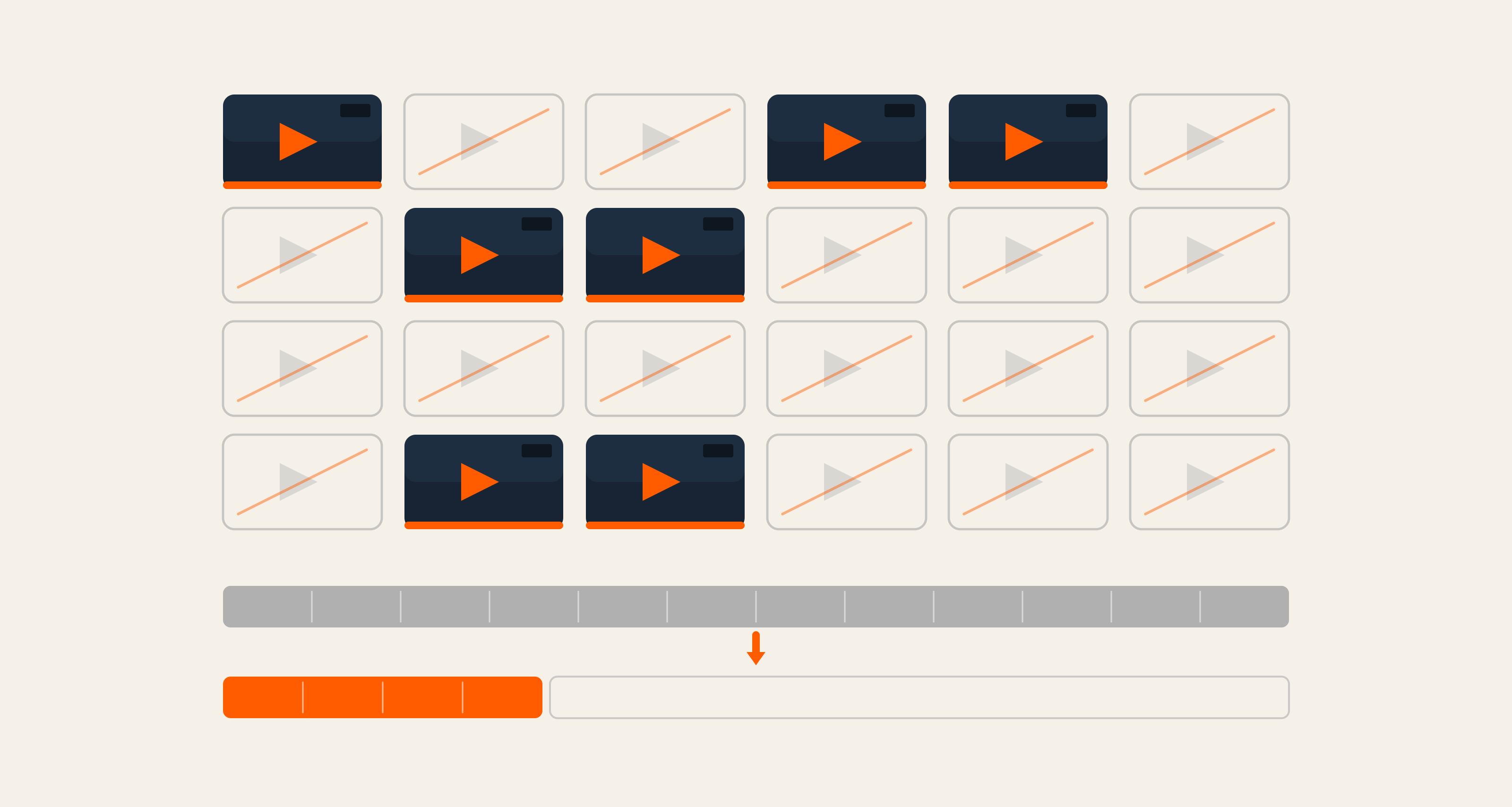
Of 141 videos, 128 ended up in a category warranting a closer look. That is the number that ran around the team like wildfire when it surfaced. It was also misleading by itself.
A closer look does not mean delete. A closer look meant a human had to verify, in each case, whether the absence of an active reference meant the video was actually unused or whether it had been pulled into a place the inventory could not see.
The team did that verification over the course of about a week. By the end of the second week, the library had been cut to roughly 30% of its original size, with full sign-off from marketing and engineering. The deleted videos were archived rather than removed, in case the call needed to be reversed.
What Made The 70% Possible
The cleanup only shipped because two months before the renewal, marketing had refreshed their campaign asset list. They knew which campaigns were active. They knew which assets were live. The engineers who maintained the CMS knew which embed types were canonical and which were legacy. Both lists were already accurate when the cleanup question landed.
If those lists had been stale, the inventory would have flagged the same 128 videos, and the team would have been stuck. Stuck on the same question that had blocked the work for the previous two years. Are we sure?
Claude found the candidates. The team knew which candidates were real. That is the actual division of labor that worked here, and it is the one we keep coming back to in every story like this.
What The Stakeholders Said
The most-quoted moment from this engagement was not in the cleanup. It was in the conversation with Cloudflare that came after.
The VP, Business and Enterprise Technology, walked into the renewal with a 70% reduction in video weight and supporting documentation. The conversation that followed was, by his own account, the easiest renewal negotiation he had ever run. The vendor had been preparing for a price discussion. He was preparing for a usage discussion. The numbers in the room had moved.
He told us afterward that the reduction gave them leverage going into the renewal. That word, leverage, has stuck with us. It is the word we now use internally to describe what work like this actually buys. Not just the cost saving, which is real. The cost saving is the headline. The leverage is the part that compounds.
A team that knows exactly what it uses and what it does not negotiate differently. A team that has that knowledge always available negotiates differently across every vendor relationship, not just the one that triggered the cleanup.
What's Next
The same client has asked us to look at three other vendors with renewals coming up. The pattern is the same in each. A library or usage profile that everyone has agreed needs cleaning up, but nobody has cleaned up. A deadline is approaching. A team that knows the answer is in there somewhere if someone could surface it.
The inventory step now takes hours, not weeks, because we have a clearer pattern for unifying metadata and asking the model the right questions. The verification step still takes humans. We have not found a shortcut around that, and we are not looking for one. Verification is the part that protects the team from a confident bot accidentally deleting the wrong asset.
If you have a vendor renewal coming up and a usage profile that hasn't been audited recently, we'd be glad to walk through the inventory step with you. It is one of the cheapest ways to walk into a negotiation with leverage you did not have last quarter.
Bring this dispatch into a working session - one page in, scoping memo out.
Brief Foyer