
Introduction
Why qualitative research produces better delivery outcomes, and how to build the chain from insight to sprint.
Most digital modernization programs treat qualitative research as a discovery deliverable: something that produces insights, maybe a journey map or a persona set, and then hands it off to the design team. The research phase ends. The delivery phase begins. And somewhere between those two moments, most of the research findings quietly stop influencing decisions.
The wireframes reference the personas. The final product does not reflect the insights. The sprint backlog was built from stakeholder requirements, technical constraints, and design decisions, not from what the research actually found. The research was real. The chain from research to delivery was broken.
What The Chain Should Look Like
In a recent program, we conducted 51 in-depth interviews and over 1,000 survey responses across six global regions before a single wireframe was drawn. That research was not the deliverable. It was the input to a chain of connected decisions that ran from finding to sprint.
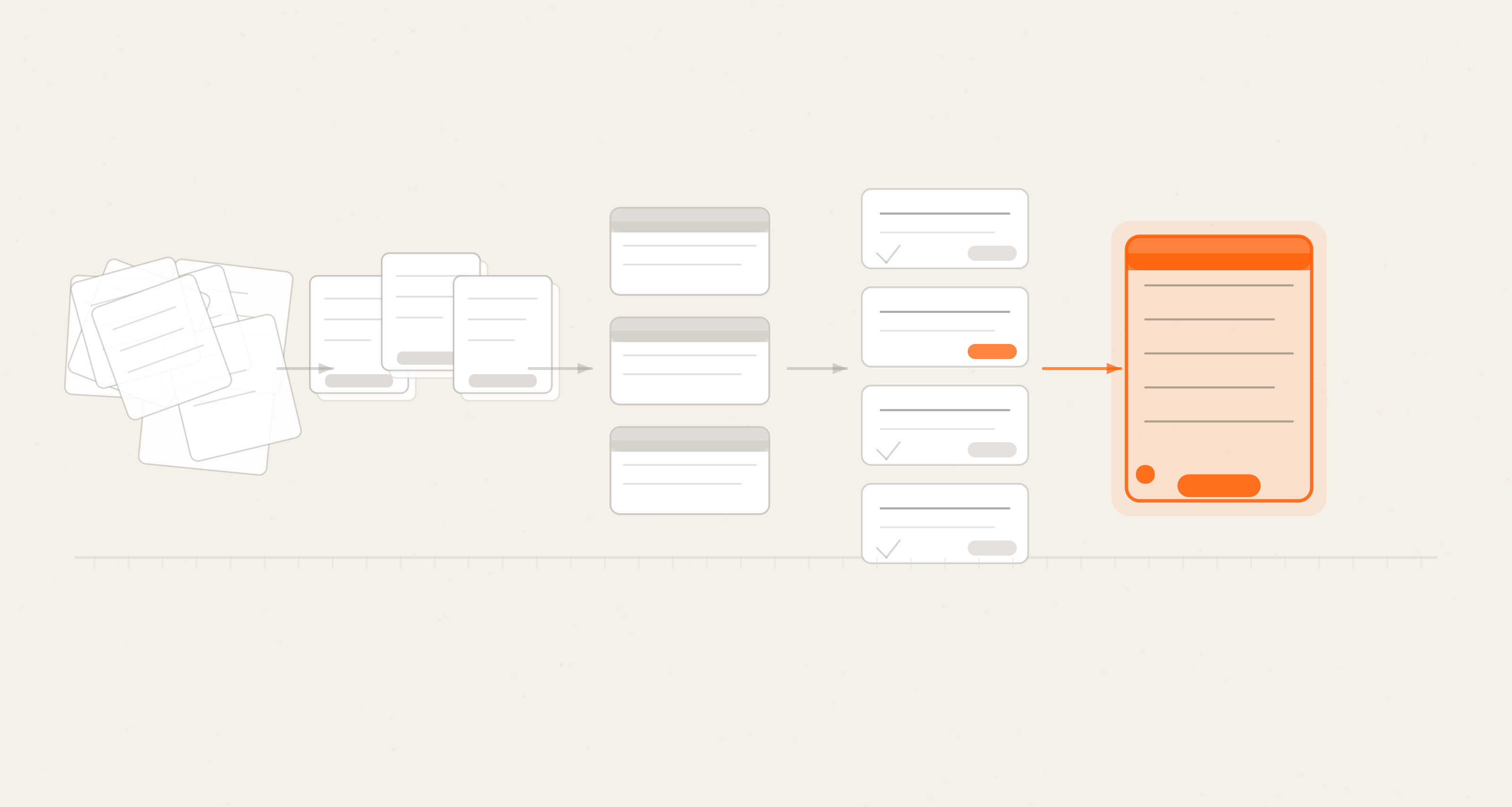
The chain has five links, and each link must be completed before the next one is meaningful.
Link 1 is Synthesis. Raw research findings are synthesized into themes: not insights presented as bullet points, but structured observations about what is working, what is not, and why. Synthesis is the step where contradictions in the research are resolved, patterns across regions and segments are identified, and findings are organized by the type of change they require, whether business process, technology, or experience.
Link 2 is IA Principles. Each synthesized theme is translated into an IA principle, a structural decision about how the digital estate should be organized. Not "users want a better experience" but "the navigation must lead with user intent rather than product category because research shows users arrive with experiential goals, not product vocabulary." Specific, falsifiable, traceable to the research.
Link 3 is Feature Identification. Each IA principle generates a set of features. The feature is the implementation expression of the principle. One principle, "users must never re-submit information at a second touchpoint that they already provided at a first," might generate five or six features across identity management, form pre-population, and cross-shop data sharing.
Link 4 is Priority Classification. Features are classified not by implementation order or stakeholder preference, but by dependency type: features that can ship now with no external dependencies, features that require process alignment or business decisions, and features that require strategic decisions that have not yet been made. This classification determines what goes into Sprint 1, not effort estimation or stakeholder ranking.
Link 5 is the Sprint-Ready Story. Each feature becomes a user story with acceptance criteria, integration dependencies explicitly flagged, and a named blocking condition if one exists. The story is sprint-ready not when it has been estimated, but when its dependency state is known.
What This Produces in Practice
When the chain is complete, the sprint planning conversation changes character. Instead of a discussion about what to build and roughly how long it will take, it becomes a discussion about which features have confirmed-ready dependencies and which do not.
The Sprint 1 scope is not the features stakeholders most want to see. It is the features that can be built fully, without mid-sprint blockers, given the current state of integrations, business decisions, and platform readiness. Those features often include a mix of high-visibility items and lower-visibility foundational work. The foundational work goes first, not because it is exciting but because nothing else works without it.
On the program described above, this approach produced a specific outcome: the highest-friction operational issue in the ecosystem, affecting every operator in the network every day, was identified in synthesis, translated into an IA principle, became a feature, classified as a Sprint 0 emergency, and resolved before a single higher-profile feature entered the sprint. Not because anyone had planned to fix it first, but because the chain from research to delivery made it unavoidably visible.
Why Most Programs Skip Part Of The Chain
The chain is slow at the beginning. Synthesis is painstaking. Translating synthesis into IA principles requires writing things down precisely enough to be tested. Feature identification from IA principles requires resisting the shortcut of going directly from "the research said users want X" to "we should build feature Y."
Most programs skip the middle of the chain, from synthesis to IA principle to feature, because it feels like overhead between research and building. It is not overhead. It is the step that ensures the building is in the right direction. Skipping it is why programs end up with well-built features that do not address the underlying problem the research identified.
The chain takes longer to establish. It produces a shorter, more confident sprint backlog as a result, one where every story has a traceable line back to a research finding, and the priority sequence is determined by dependency reality rather than stakeholder enthusiasm.
If you want delivery that reflects what your research actually found, talk to our team.
Bring this dispatch into a working session - one page in, scoping memo out.
Brief Foyer